How K-Beauty Wins in the US: Creator Systems, Not Viral Luck

By
Yong Suk Choi

If you run brand marketing at a global beauty company, you have probably watched a Korean brand you had not heard of two years ago appear at the top of a US social ranking, and wondered what exactly they did.
The honest answer is less interesting than most agency decks suggest. They did not out-create anyone. They built a system that produces creator content continuously, finds the pieces that work, and repeats those formats until the category notices.
The 2025 data makes that visible.
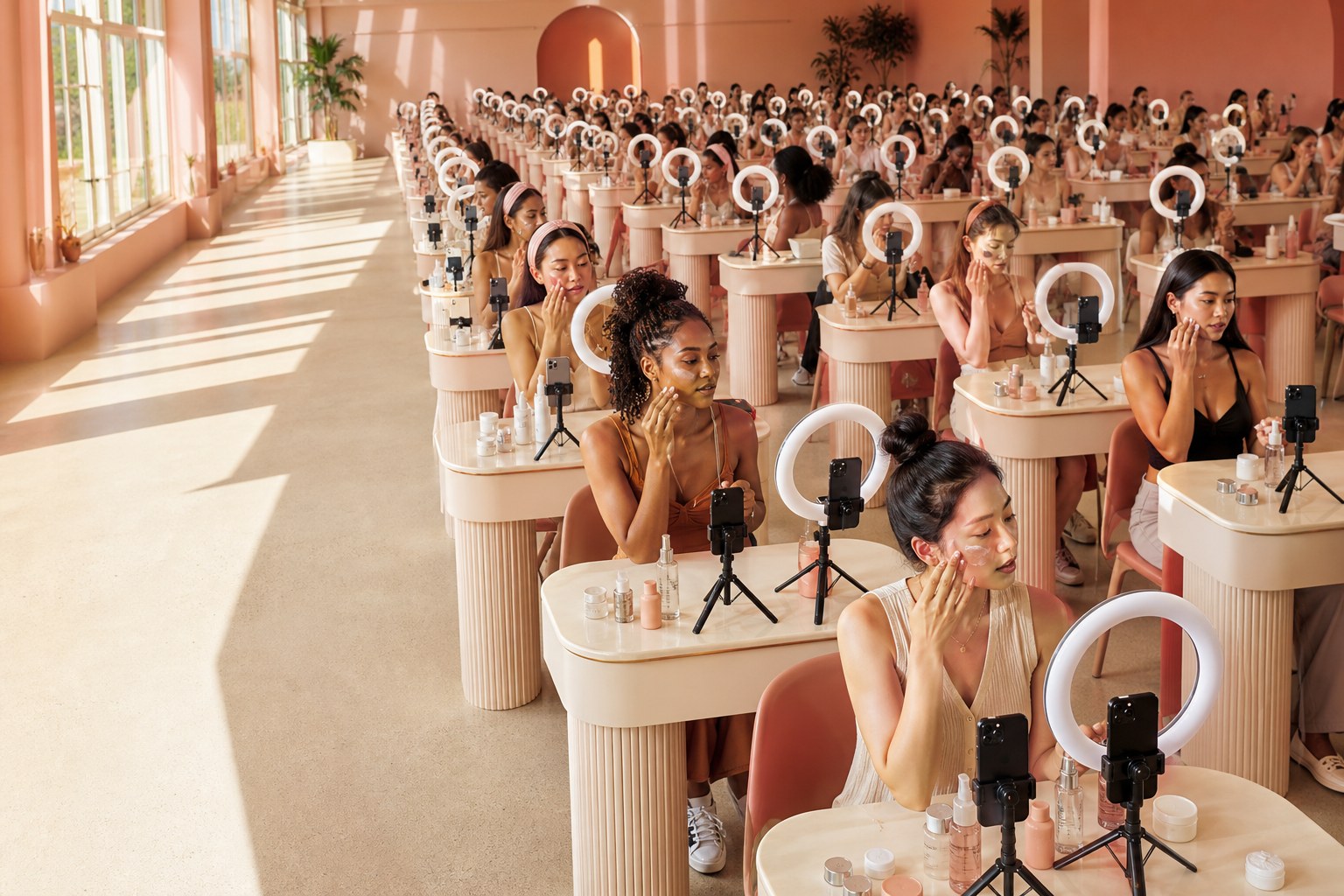
The numbers describe an operating model
Three brands illustrate the pattern at different scales. All figures below are full-year 2025 unless labeled otherwise.
Brand | 2025 EMV | Posts | Creators | Engagements |
|---|---|---|---|---|
Medicube | $504.7M | 231.2K | 39.3K | 239.9M |
Anua | $290.5M | 102.5K | 23.9K | 135.6M |
SKIN1004 | $295M | — | — | — |
Medicube and Anua: CreatorIQ, full-year 2025. SKIN1004: Lefty, 2025 EMV; ranked #3 global K-beauty brand by 2025 EMV. EMV methodologies differ between providers and should be read as directional, not as a single cross-brand ranking.
Read the creator column, not the EMV column. Medicube worked with roughly 39,300 creators in a single year. Anua worked with roughly 23,900. Those are not campaign rosters. That is a supply chain.
Anua's engagement was concentrated on one platform — TikTok drove 71.3% of it between June 2025 and May 2026 (CreatorIQ). Medicube's TikTok presence posted the fastest year-over-year growth in its 2025 set. Neither brand spread thin across every channel. They picked where creator content compounds and stayed there.
Affiliate is where attention becomes revenue
Reach is the part global brands already understand. The part they usually do not have is the conversion layer sitting directly underneath it.
Dr. Melaxin reported $64.6M in US TikTok Shop sales for 2025, with $22.7M of that from a single hero product duo. The mechanism behind it: roughly 16,600 affiliate creators, and 82% of GMV coming through affiliate (public commerce reporting for 2025; creator and GMV mix reported August 2025).
That last number is the one worth sitting with. For this brand, affiliate is not an incremental channel bolted onto a media plan. It is the sales channel. Content and commerce are the same motion, run by the same creators, in the same feed.
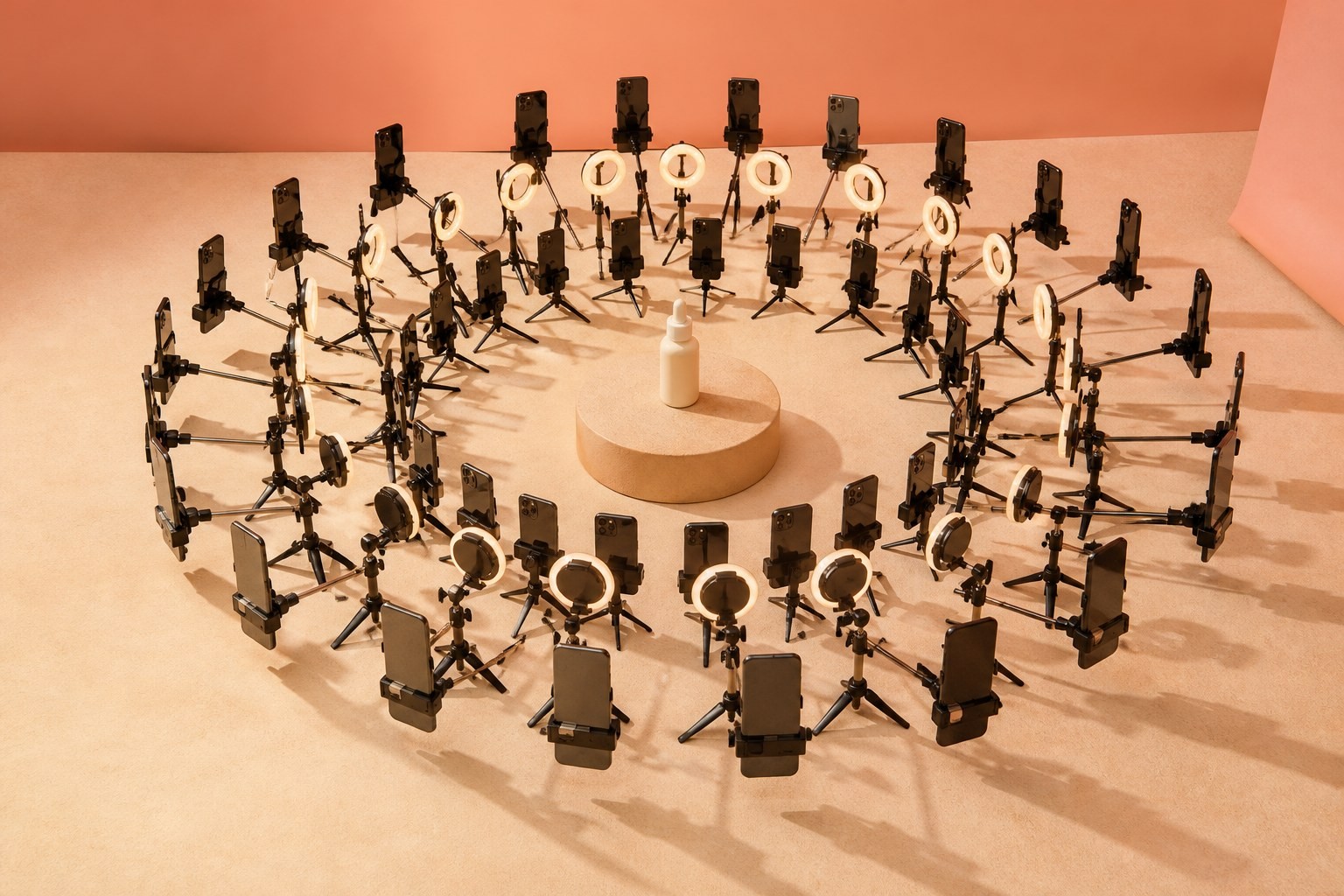
Repetition is the mechanism
A common misreading is that these brands got lucky with a few breakout videos. Historical hashtag snapshots argue against it.
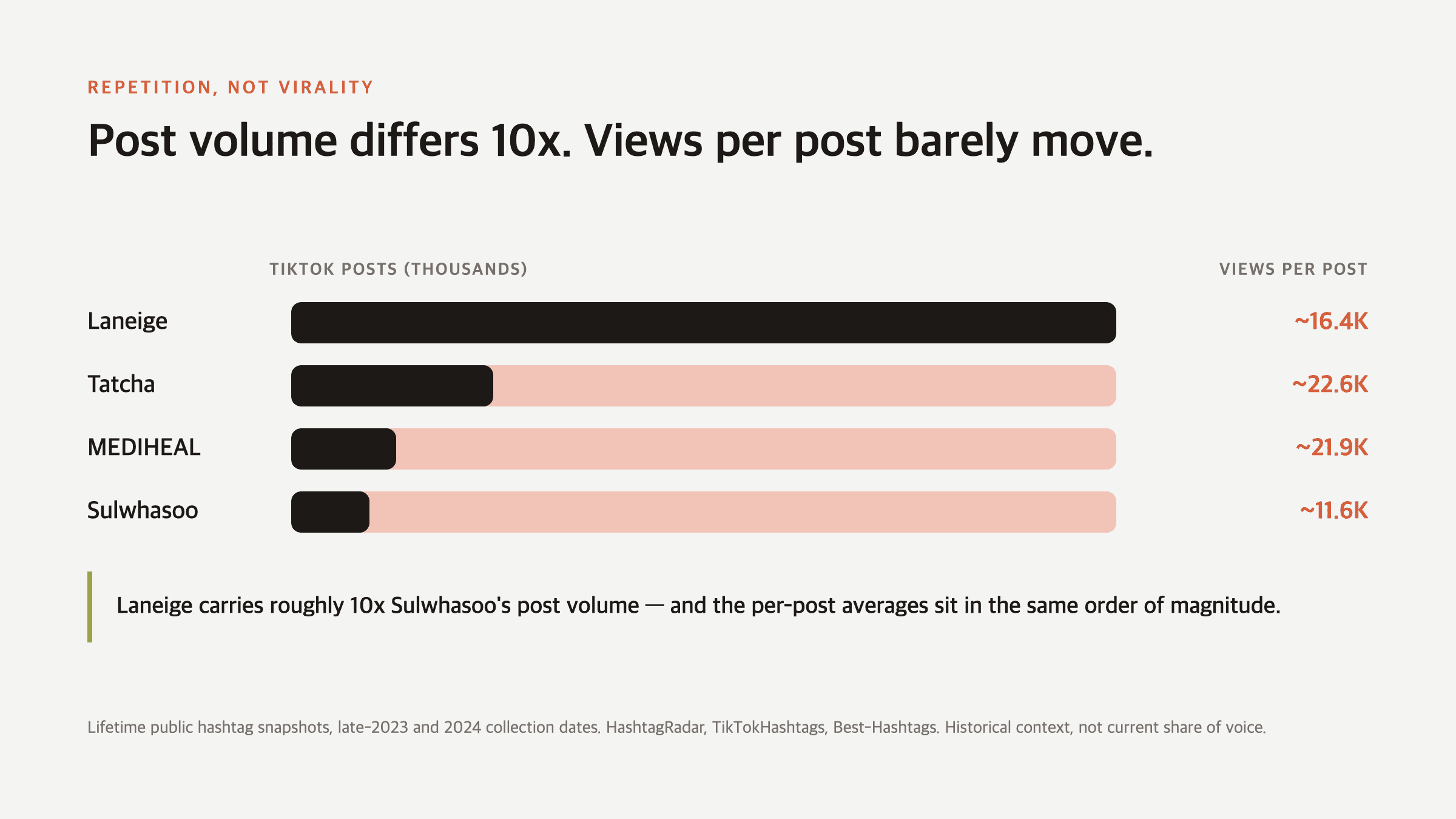
Views per post cluster in a narrow band. What separates the top line from the bottom is not per-video performance — it is how many times the brand showed up. Laneige's footprint is roughly 10x Sulwhasoo's post volume, and the per-post averages are within the same order of magnitude.
Volume is the variable. And volume is an operations problem.

The common playbook
Strip the brands apart and the same four steps remain.
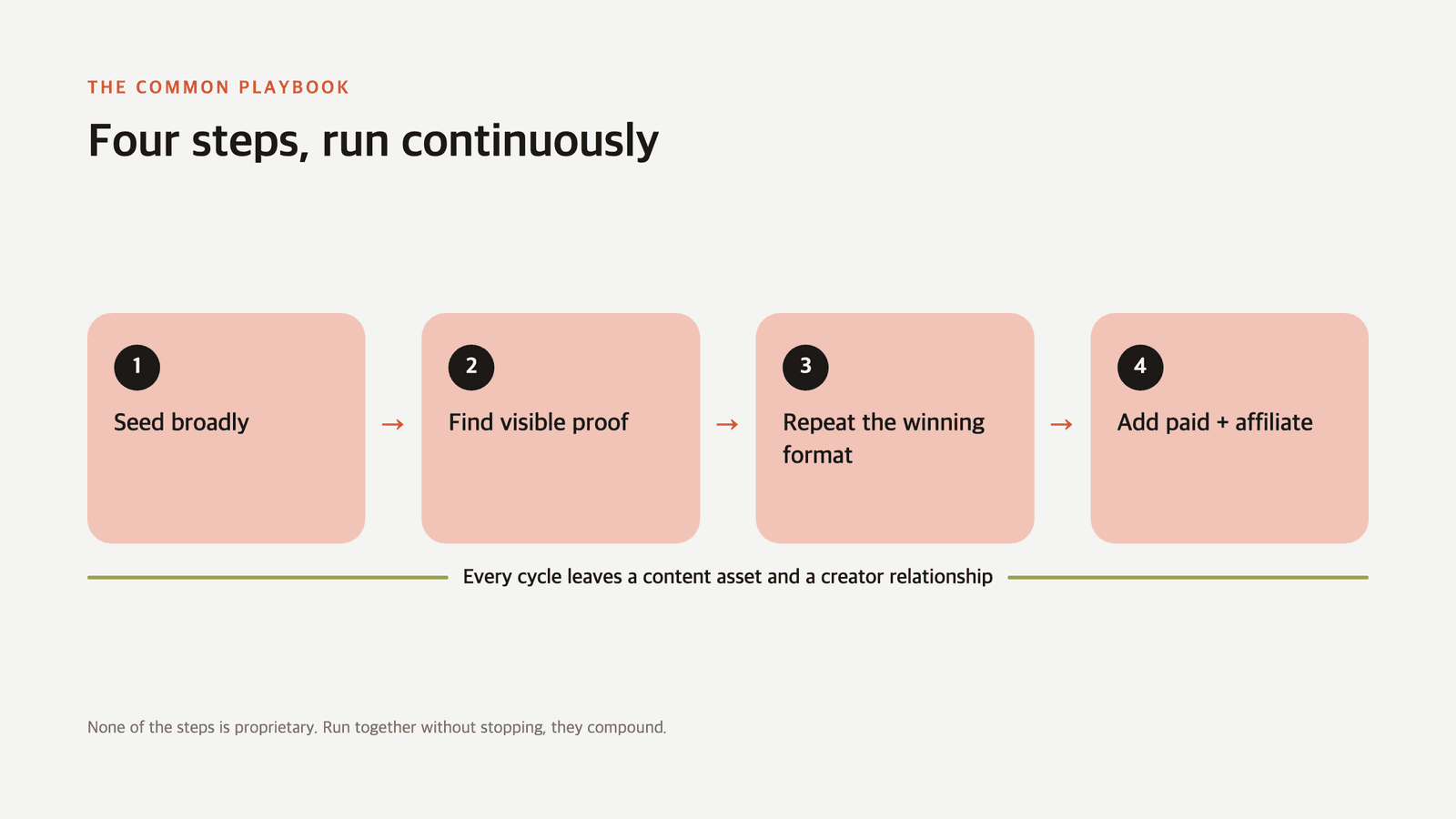
Seed broadly. Hundreds to thousands of creators per quarter, not a curated fifty. The goal is coverage of the category conversation, not a hit.
Find visible proof. Track which specific pieces earned genuine watch time and saves — not aggregate reach.
Repeat the winning format. The angle that worked becomes a brief, and the brief goes back out to the next wave.
Add paid and affiliate to the winners. Amplify only what organic already validated, and attach a purchase path to it.
None of these steps is proprietary. Together, run continuously, they compound — because each cycle produces both a content asset and a creator relationship.
Why global brands struggle to copy it
The constraint is rarely budget. Global beauty companies outspend these brands comfortably. Three structural gaps show up instead.
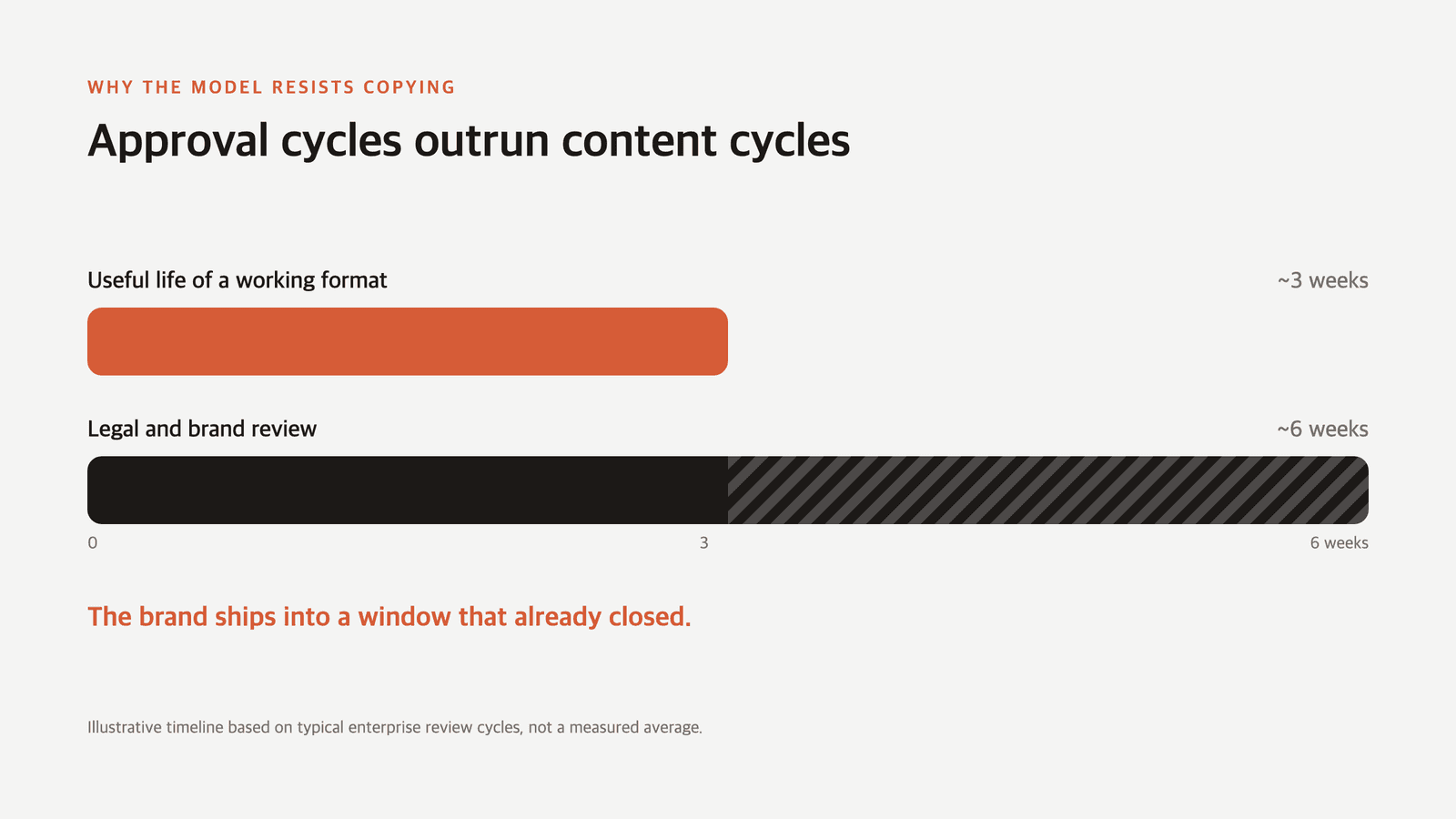
Approval cycles outrun content cycles. A format that works on TikTok has a useful life measured in weeks. If a brief needs six weeks of legal and brand review, the brand ships into a window that has already closed.
Agency scopes are built around campaigns. A campaign has a start and an end date. This model has neither. It is always-on infrastructure, and it is usually procured as if it were a burst.
Creator relationships are treated as media buys. When a creator is a line item, the relationship resets every quarter. When a creator is part of a roster, the second collaboration costs less and performs better than the first.
Every one of these is fixable. None of them is fixed by better creative.
What to ask before you start
If you are evaluating whether this model applies to your brand, three questions separate a real program from a rebranded influencer campaign:
How many creators will actually publish this quarter — not receive product, publish?
Who reads the output weekly and decides which format goes back out?
Where does the purchase path sit inside the content, and who owns that number?
If the answers are vague, the program will produce reach and nothing that compounds.
Frequently asked questions
Is this only viable for low-priced skincare?
No. Price point changes the creator mix and the content register, not the structure. Prestige brands run smaller, more selective rosters and lean on ritual and demonstration rather than volume — but the loop of seed, identify, repeat, amplify is the same.
Does this require TikTok Shop?
No, but the affiliate layer is where attention converts most directly. Without it, the model still produces awareness; it just leaves the conversion to other channels.
How long before the system produces results?
Content assets accumulate within a quarter. The compounding effect — creators who post again without being asked, formats that keep working — takes two to three quarters of continuous operation.
BAZZAAL runs creator seeding, TikTok Shop, and paid campaigns for beauty brands entering or scaling in the US — from Los Angeles.
Related: how much K-beauty sells on TikTok Shop · the H1 2026 US numbers · how to pick a US agency
Written by
Yong Suk Choi
Chief Business Officer
Chief Business Officer at BAZZAAL. 15+ years of zero-to-one go-to-market execution across Korean and US markets, now leading growth for K-beauty brands entering the US from Los Angeles and Seoul.
Connect on LinkedIn
Planning your US launch?
BAZZAAL runs creator seeding, TikTok Shop, and paid campaigns for K-beauty brands entering the US — from Los Angeles, in Korean-company workflows.
Subscribe to STATESIDE
Weekly US K-beauty intelligence, from our team on the ground in LA.


