Do Consumers Trust AI Ads? 2026 Data Says Trust Is Moving to Real Creators

By
Yong Suk Choi

AI has made ads cheaper to produce. It has not made them easier to believe.
In August, Bentley University and Gallup surveyed 3,270 US adults. 79% said they had seen an ad in the past 30 days that looked AI-made. Only 19% felt positive about businesses using AI to create ads, while 49% felt negative. Among adults 18 to 29, the negative share rose to 66%.
A post from @manofmany turned that into a simple headline: the internet generation trusts AI ads the least. The data backs that up. But the finding that matters most for beauty brands sits one layer down. Consumers are not rejecting AI. They are rejecting fake people.
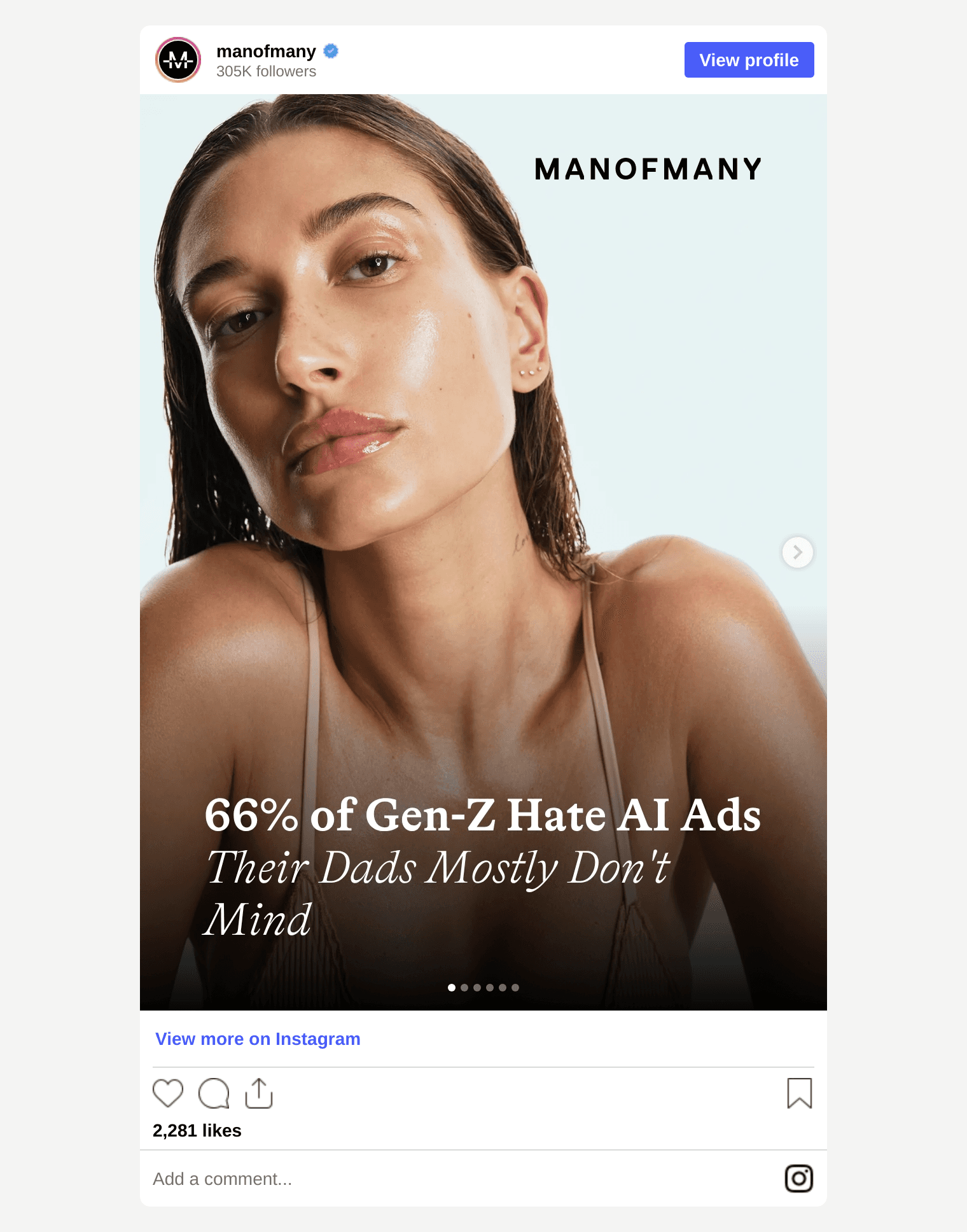
The @manofmany post that turned the Gallup numbers into a headline. View on Instagram
What did the 2026 surveys actually find?
Four independent studies this year point the same way.
Bentley-Gallup (August 2026, 3,270 US adults): 79% saw AI-looking ads. 49% negative, 19% positive.
IAB and Sonata Insights (January 2026, 505 US Gen Z and Millennial consumers plus 104 ad executives): Gen Z negativity toward AI ads nearly doubled, from 21% in 2024 to 39%. Executives expected 82% of consumers to feel positive. Only 45% did.
Kantar (2026, global ad testing database): ads made with generative AI scored in the 54th percentile on average, against the 65th for ads made without it.
Ipsos and Syracuse University's Newhouse School (May 2026, 3,000 US consumers, 20 ads): viewers rated the AI-made ads as less creative and less emotional than the human-made ones.
The gap between what marketers assume and what consumers feel is the real story. The IAB found it widening year over year.
Do people reject AI, or do they reject fake people?
Gallup asked a sharper question: which uses of AI are acceptable if the brand discloses them?
AI for brainstorming and drafts: 75% acceptable
AI for final text, images or video: 53% acceptable
AI to create people or voices: 62% unacceptable, rising to 73% among 18 to 29 year olds
That is the line. Shoppers are fine with AI in the workflow. They draw a hard stop when AI stands in for a human face or voice. Disclosure does not fix it.
The IAB saw the same pattern in how Gen Z describes brands that use AI ads: 30% called them inauthentic, compared with 13% of Millennials.
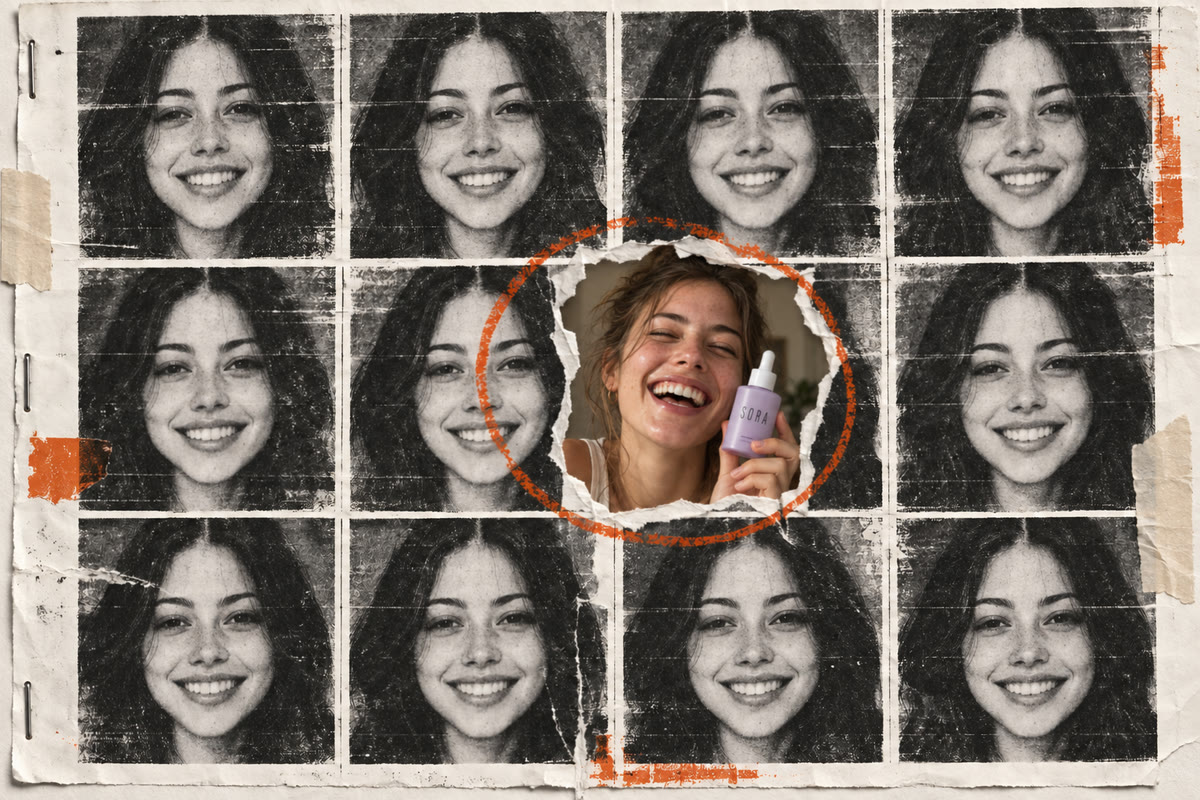
For skincare and makeup, this line matters more than for most categories. The face on screen is the proof. A synthetic face cannot show how a serum sits on real skin.
Does that make every influencer more valuable?
No, and it is worth saying plainly.
Gartner surveyed 1,006 US consumers in May and June 2026. 65% said brands are producing too much AI-generated content, and 57% said it has made them less trusting of brand messaging overall. The finding that matters most here: 35% now rely less on influencers for shopping information because of AI, yet 43% rely more on real people. Read together, consumers aren't walking away from creators. They're walking away from creators who don't feel real.
Gartner's analyst Emily Weiss put it plainly: "The answer is not to avoid AI. The answer is to use it thoughtfully." She added that marketers need clear guidelines on AI use in any brand-influencer partnership.
Sprout Social's 2026 influencer report found 44% of consumers across the US, UK and Australia are uncomfortable with brands using AI influencers.
Sprout's number points the same way: trust is not flowing to influencer marketing as a category. It is flowing to people who are visibly real. A creator whose content looks templated, over-filtered or AI-polished is losing credibility along with the brand ads.
So the shift is not "more influencers." It is that as AI content becomes cheap and endless, a believable human becomes the scarce thing.
How are beauty brands responding?
The largest beauty advertisers are already drawing the same line.
Dove: has committed to never using AI imagery in place of real women, and extended that to Dove Men. Creators who want to use AI need case-by-case approval. Unilever's wider plan is influencer-first, with around 300,000 creators. (Digiday, June 2026)
Aerie: bans AI-generated people and bodies in both campaigns and creator content. (Glossy, March 2026)
Premium beauty marketers: say "good enough" AI creative still needs human finishing, and that shipping it as is risks brand trust. (Glossy, September 2026)
None of them stopped using AI. They moved it behind the camera and kept real people in front of it.
What rules now apply to AI people in US ads?
The platforms have moved faster than federal law.
Meta: ads with photorealistic AI people now show an AI label next to "Sponsored." AI information sits in "About this ad."
TikTok: ads that are fully AI-generated or heavily altered must carry a disclaimer. This includes Spark Ads, which run on creator posts.
YouTube: labels AI content using automatic detection and C2PA metadata.
New York: law A8887 requires ads using synthetic performers to disclose it. Penalties are $1,000 for a first violation and $5,000 after that.
FTC: there is no AI-specific label rule. Existing rules on deception and endorsements still apply, including to fake reviewers.
What should K-beauty brands do now?
Use AI behind the camera. Briefs, scripts, translations, edits and variant testing are where shoppers accept it.
Keep faces, skin and voices human. No synthetic models, no cloned voices, no AI "before and after."
Choose creators for signs of being real. Consistent face and voice across posts, real comments, a history with the category. Reach alone does not tell you this.
Write AI rules into the creator brief. What creators may use, what they must disclose, and what needs approval.
Label before the platform does. Check TikTok disclaimers on Spark Ads and Meta labels before launch.
We coach the creators we work with on exactly this. Our Creator Bootcamp series takes point 3 from the creator's side: giving your audience a reason to watch, and building a community that trusts your recommendations.
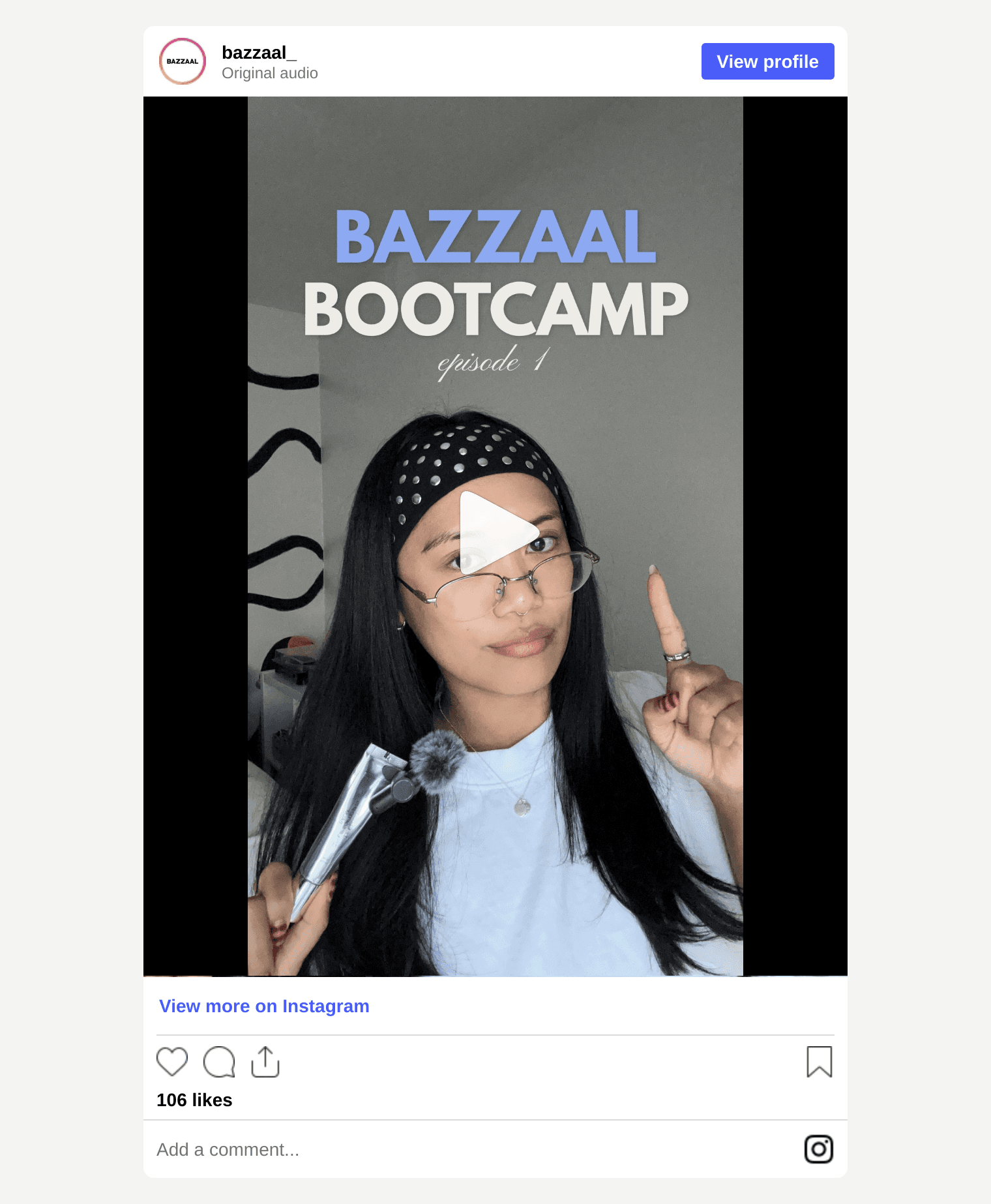
BAZZAAL Bootcamp EP. 1: give your audience a reason to keep watching. View on Instagram
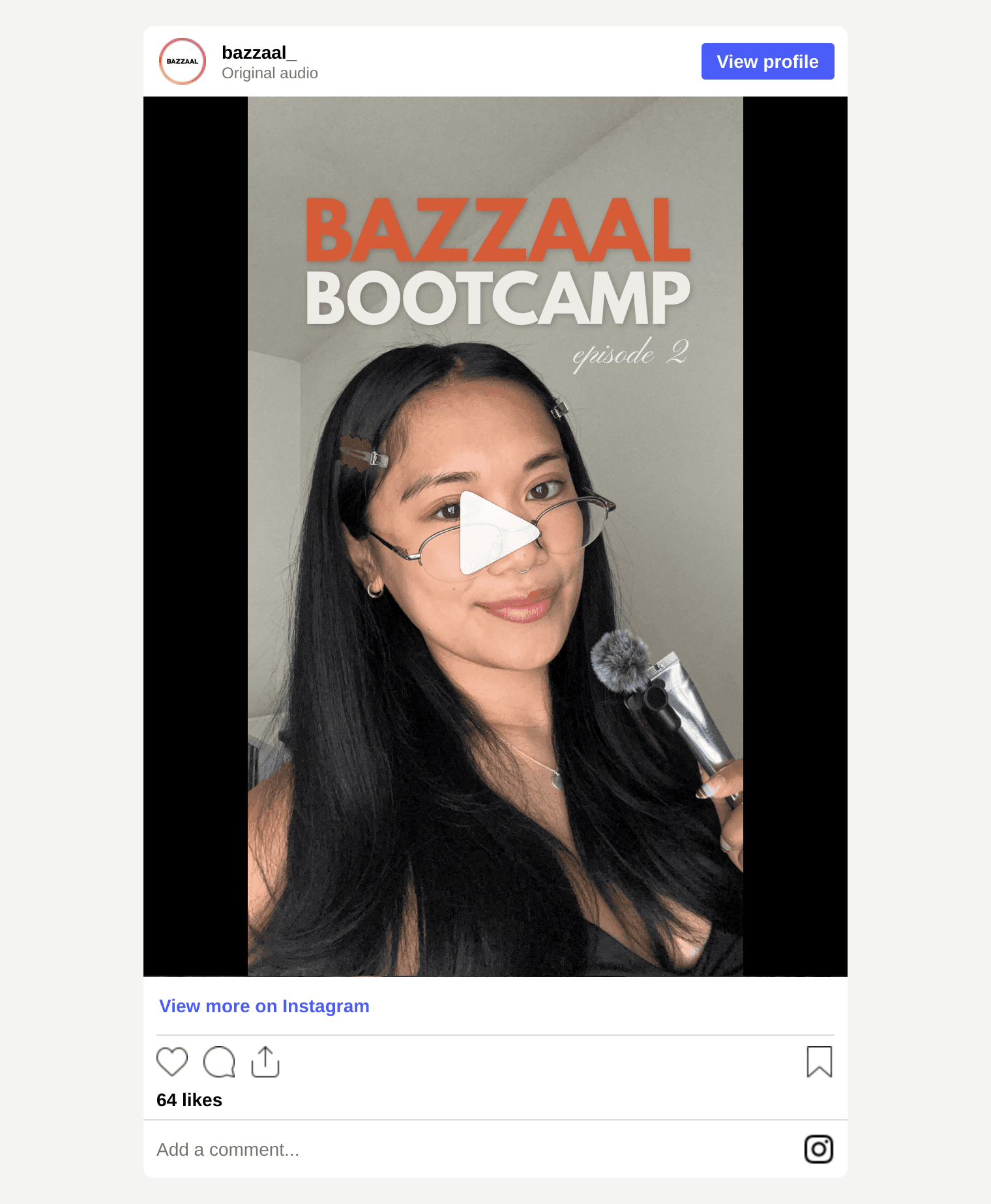
BAZZAAL Bootcamp EP. 2: build a community that trusts your recommendations. View on Instagram
The answer is not fewer creators. It is more real ones, chosen well.
BAZZAAL runs US creator programs for Korean beauty brands from Los Angeles, catching creator trends as they happen and bridging Korean teams and the US market.
Running a U.S. creator program? Talk to our team.
Sources: Gallup, "Americans Aren't Sold on Businesses Using AI in Advertising," August 19, 2026 (Bentley University-Gallup Business in Society survey, n=3,270, May 4 to 11, 2026). IAB and Sonata Insights, "The AI Ad Gap Widens," January 15, 2026. Kantar, "The State of GenAI in Media and Advertising," 2026. Ipsos and Syracuse University Newhouse School, "AI Ads Are Good Enough, and That's the Problem," May 18, 2026. Gartner, "Gartner Marketing Survey Finds 35% of Consumers Rely on Influencers Less Due to AI," September 22, 2026 (n=1,006 US consumers, May to June 2026). Sprout Social, 2026 Influencer Marketing Report, July 24, 2026. Digiday, June 11, 2026. Glossy, March 26 and September 25, 2026. Meta, "Expanding GenAI Transparency for Meta's Ads Products," updated June 1, 2026. TikTok Ads Manager help, "About ad disclaimers." YouTube Official Blog, May 27, 2026. New York State Assembly bill A08887.
Related: Does AI Search Cite Brand Websites? · Creator Usage Rights Cost
Written by
Yong Suk Choi
Chief Business Officer
Chief Business Officer at BAZZAAL. 15+ years of zero-to-one go-to-market execution across Korean and US markets, now leading growth for K-beauty brands entering the US from Los Angeles and Seoul.
Connect on LinkedIn
Planning your US launch?
BAZZAAL runs creator seeding, TikTok Shop, and paid campaigns for K-beauty brands entering the US — from Los Angeles, in Korean-company workflows.
Subscribe to STATESIDE
Weekly US K-beauty intelligence, from our team on the ground in LA.