Seoul's Popups Are the Cheapest US Creative Test You'll Run

By
Yong Suk Choi

Korea's offline beauty moment is showing up in the numbers. Musinsa Beauty Festa in Seongsu pulled about 31,000 visitors over four days in August, and participating brands' online sales rose 246% year over year across the festival window. Musinsa Beauty then opened its first standalone store in Hongdae on September 11, with roughly 870 brands, about 12,000 products, and a K-beauty pharmacy in the basement.
None of that is US demand. What a Seoul popup actually gives a brand planning a US launch is a validated shot list: the specific product moments that made a stranger pull out a phone. That finding travels. The footage doesn't.
What's happening
Seoul's beauty retail has quietly stopped being retail. Walk through a Seongsu popup and roughly as many people are holding phones as products: filming the entrance object, swatching texture on the back of a hand, opening the gift set on camera. The store is functioning as a production floor, and the visitor is functioning as the crew.
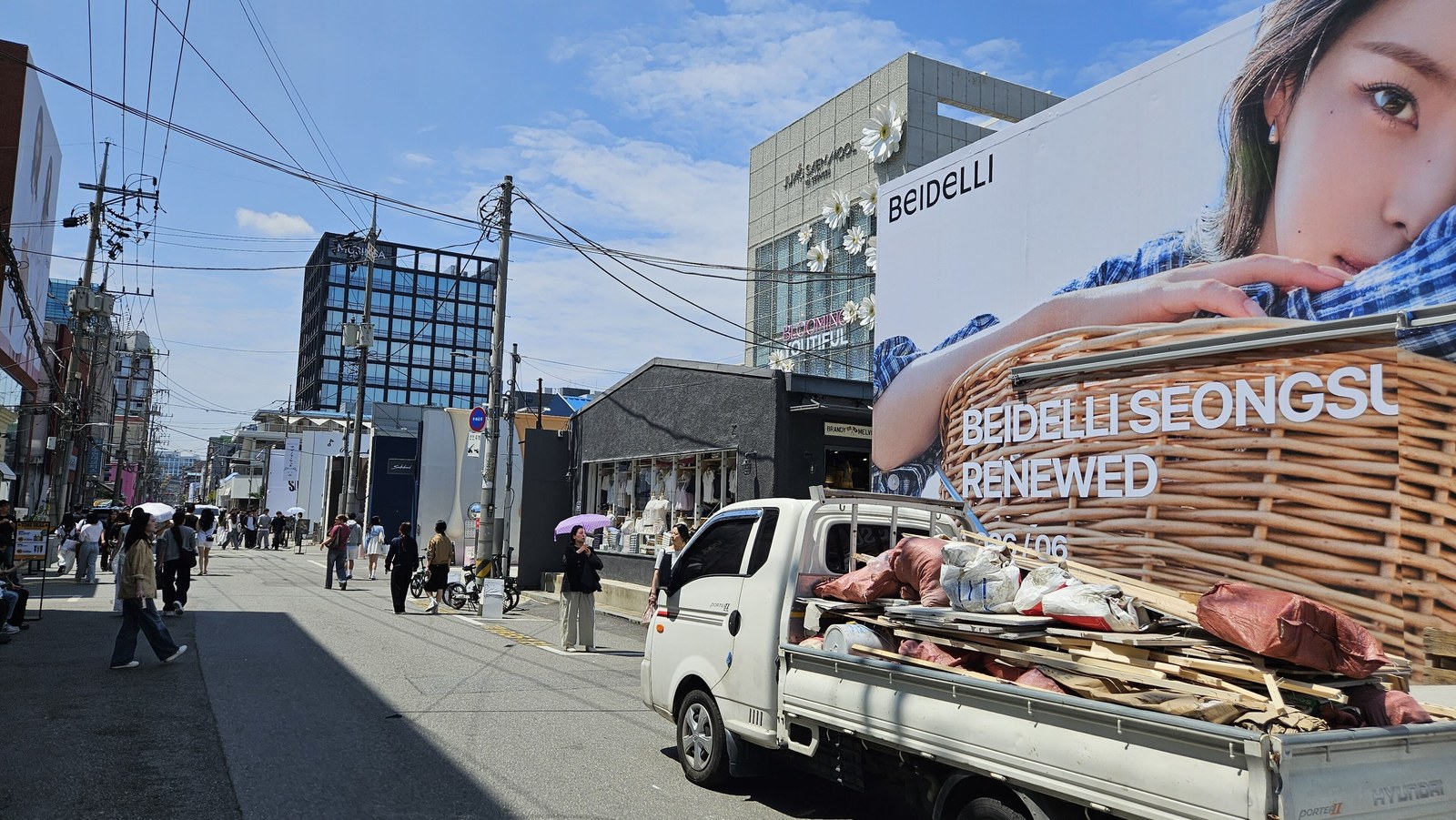
Seongsu-dong, Seoul, the district that hosted Musinsa's Beauty Festa. Converted factory blocks, short walking distances, and storefronts built to be photographed.
The numbers behind August back that up. Musinsa's Beauty Festa ran in Seongsu from August 20 to 23 and drew about 31,000 visitors. Over the wider online festival window, from August 10 to 23, the participating brands' sales were up 246% against the same period a year earlier, and 150% against the two weeks immediately before. One inner-beauty brand reportedly did 36× its prior-period volume.
Then the format went permanent. On September 11, Musinsa Beauty opened its first standalone store in Hongdae: about 1,262㎡ across four floors, roughly 870 brands and 12,000 products, with a "pharmacy beauty" floor in the basement where a resident pharmacist sits between the trouble-skin and inner-beauty shelves. In its first three days the store and pharmacy together did about ₩250 million.
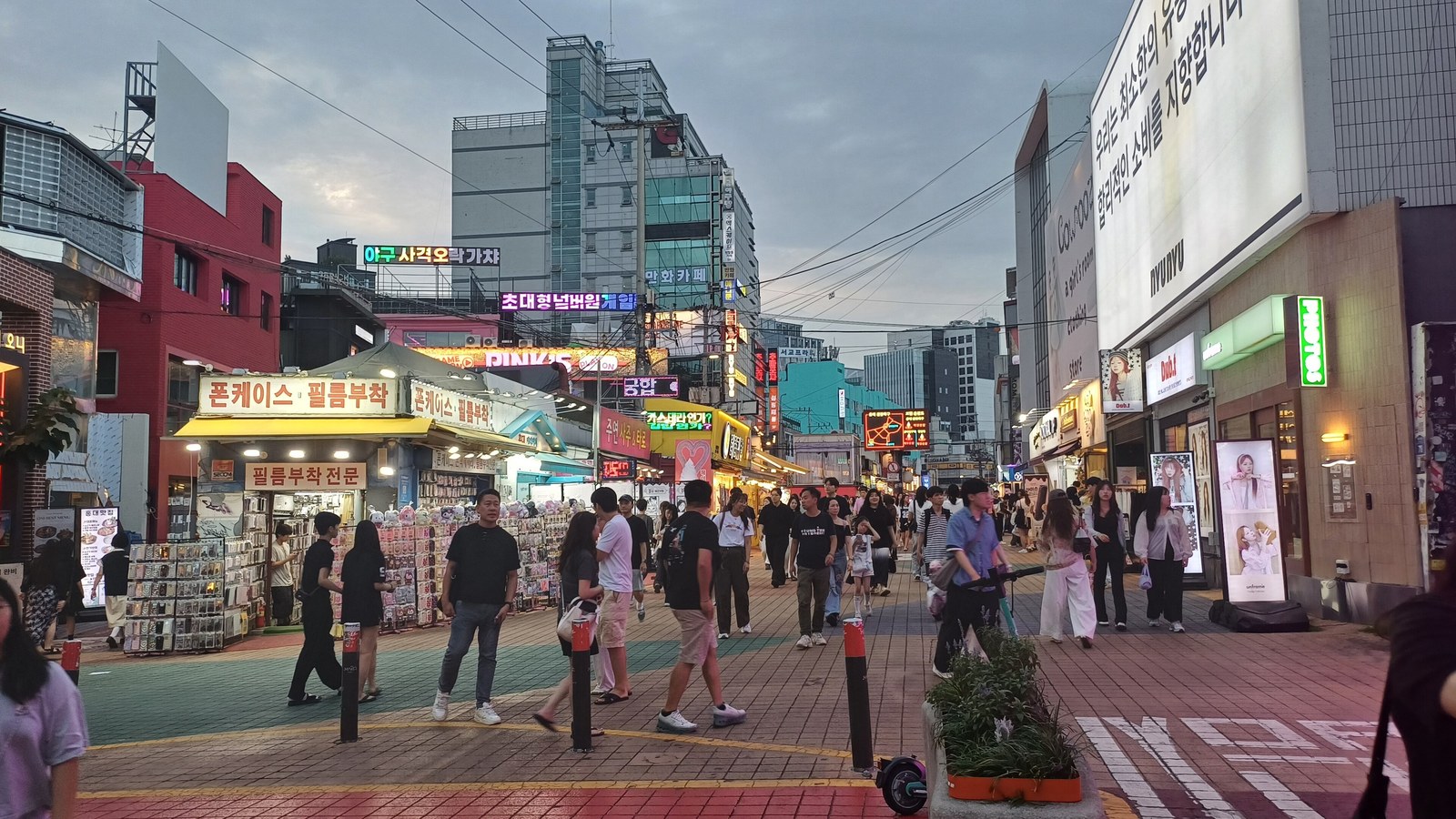
Hongdae, where Musinsa Beauty opened its first standalone store on September 11.
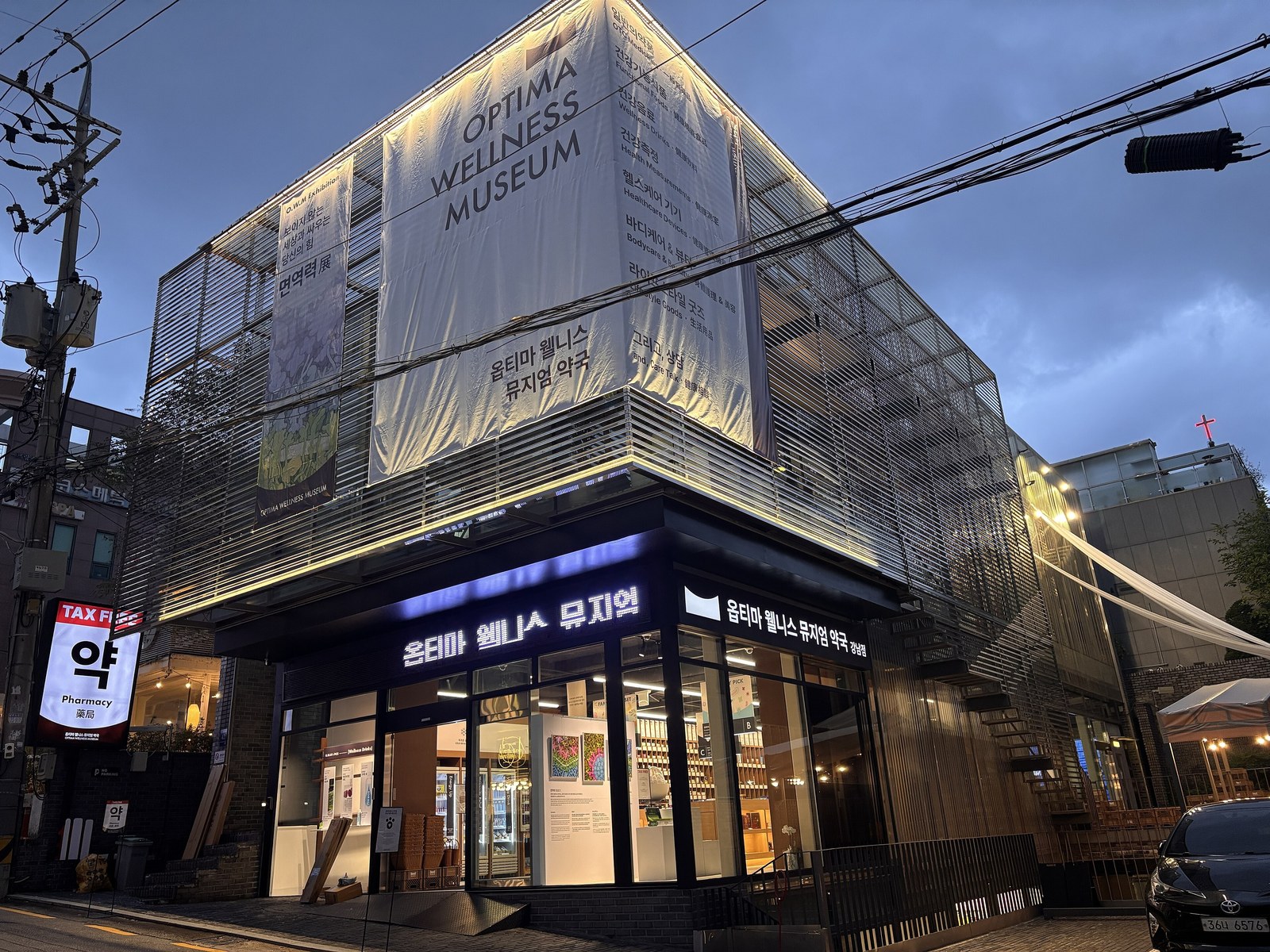
A neighborhood pharmacy in Korea. The basement floor of the Hongdae store is the part with no US equivalent: a resident pharmacist between the trouble-skin and inner-beauty shelves.
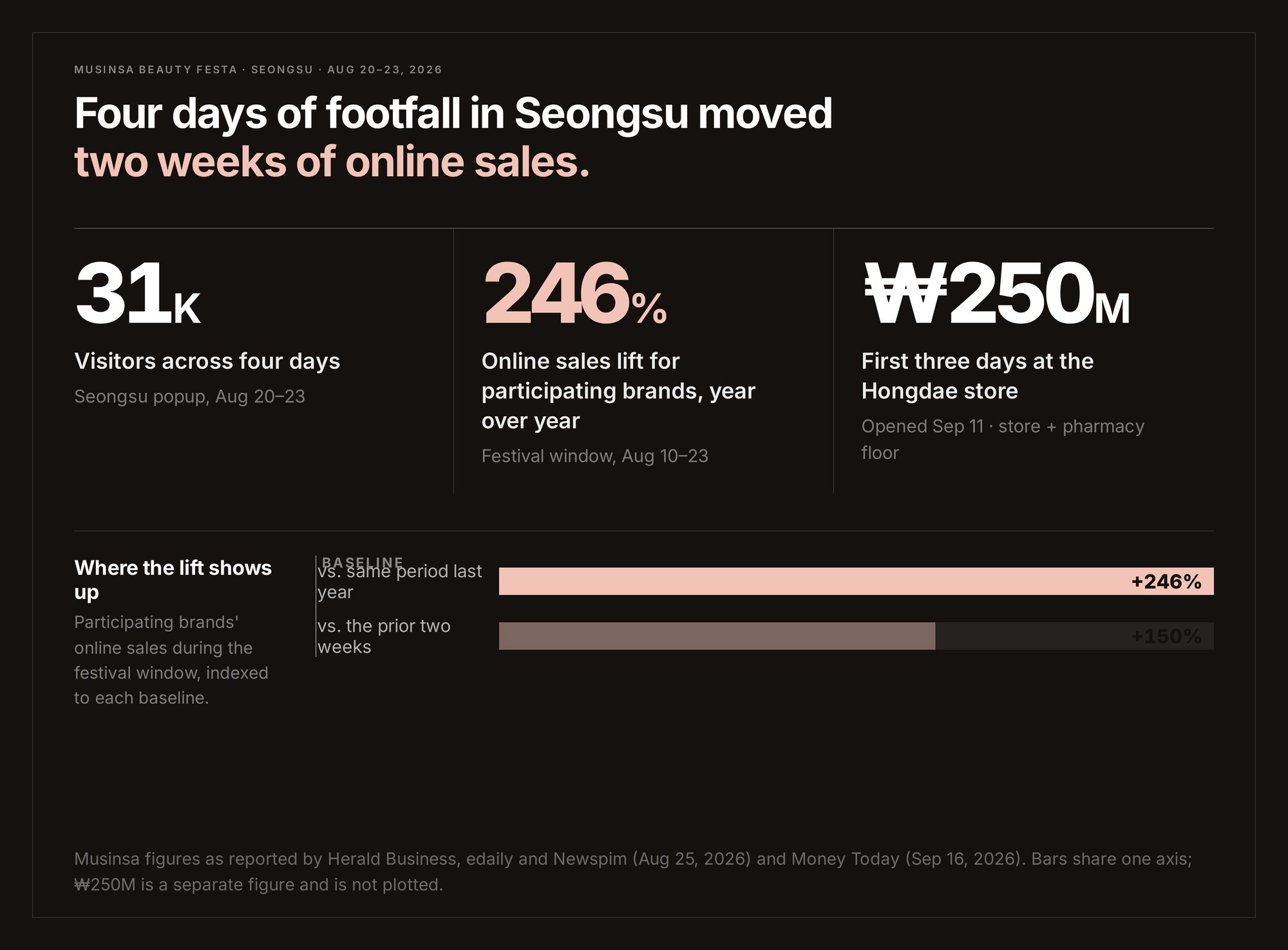
Musinsa's own figures as reported in the Korean press in August and September 2026. The offline number is the smaller one.
The asset most brands throw away
A popup wrap report usually opens with visitors and on-site revenue. Both matter. Neither is the thing you carry into a US campaign.
What you carry is narrower and more useful: which moment made someone film. Not "the popup performed well," but that the shade-matching mirror held people for ninety seconds while the brand-world installation held them for eight. That the pharmacist's thirty-second ingredient explanation generated more questions than the entire product wall. That everyone who filmed the gift set filmed the same three items in the same order.
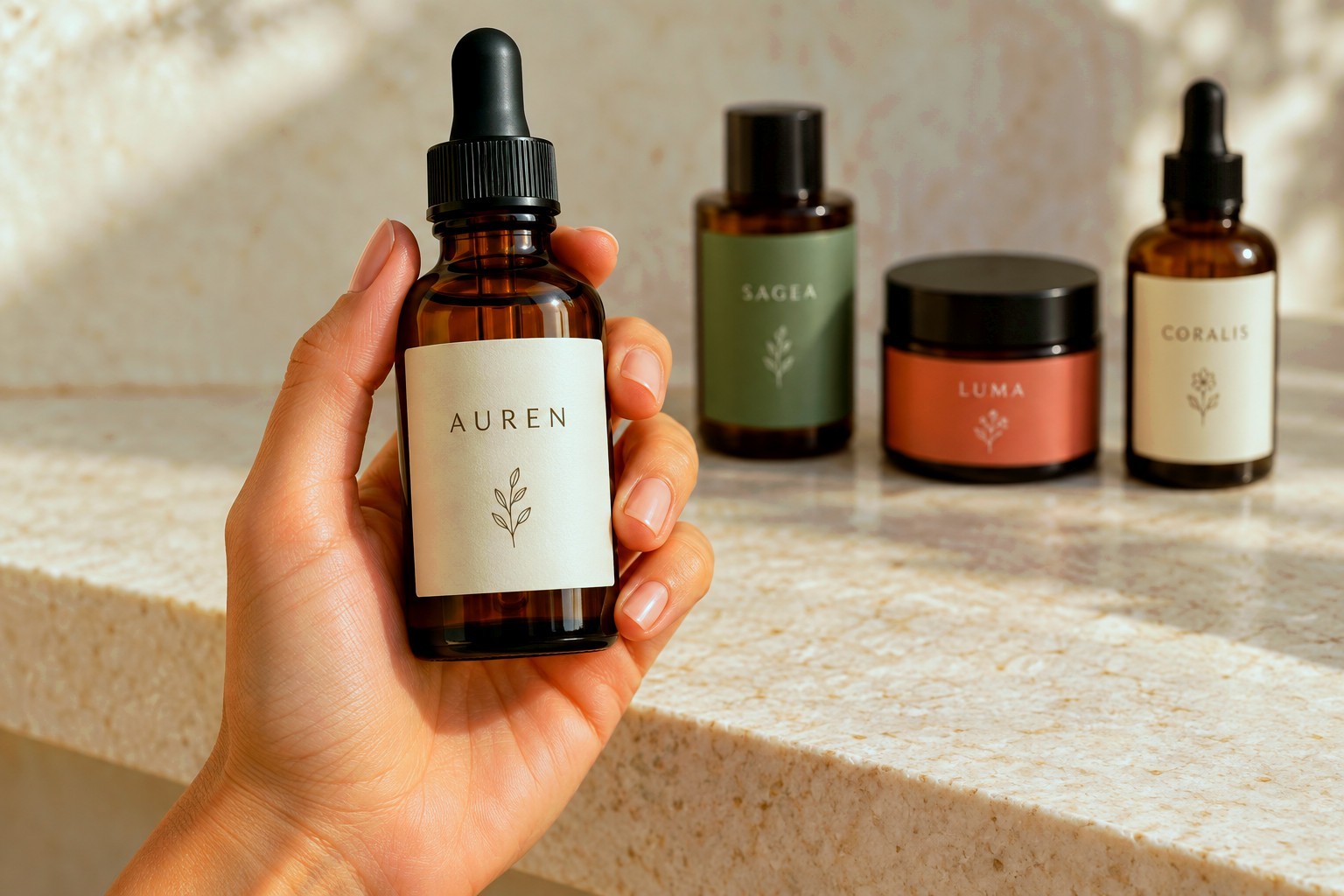
One named product, held up and filmed. That is the unit a shot list is made of. Not "the popup went well," but which item a stranger picked up and why.
That's a shot list, and a shot list is portable in a way a video file never is. It is the one output of a Seoul popup that a Los Angeles creator can act on next week.
Take the reaction, leave the recording.
Which is why the creator plan has to be set before the doors open, not after the first day's photos come back. All of it is a pre-production decision: who is coming, what they're being shown, which of the four beats each one owns, and where the content points afterward. Booking creators once the popup is live gets you twelve versions of the same entrance shot.
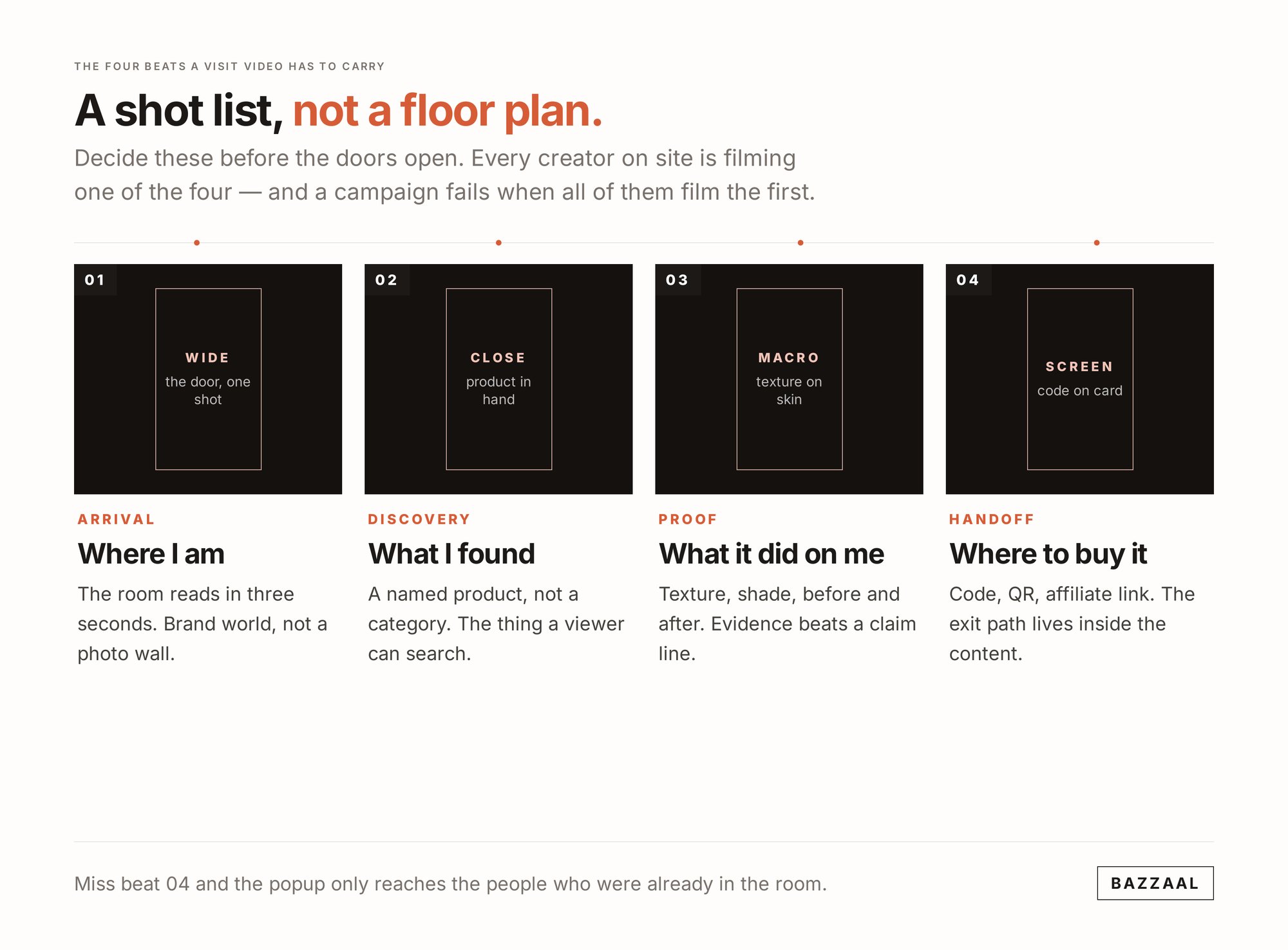
The four beats. Most popup content stalls on the first one, which is why brands end up with a memorable space and an unmemorable product.
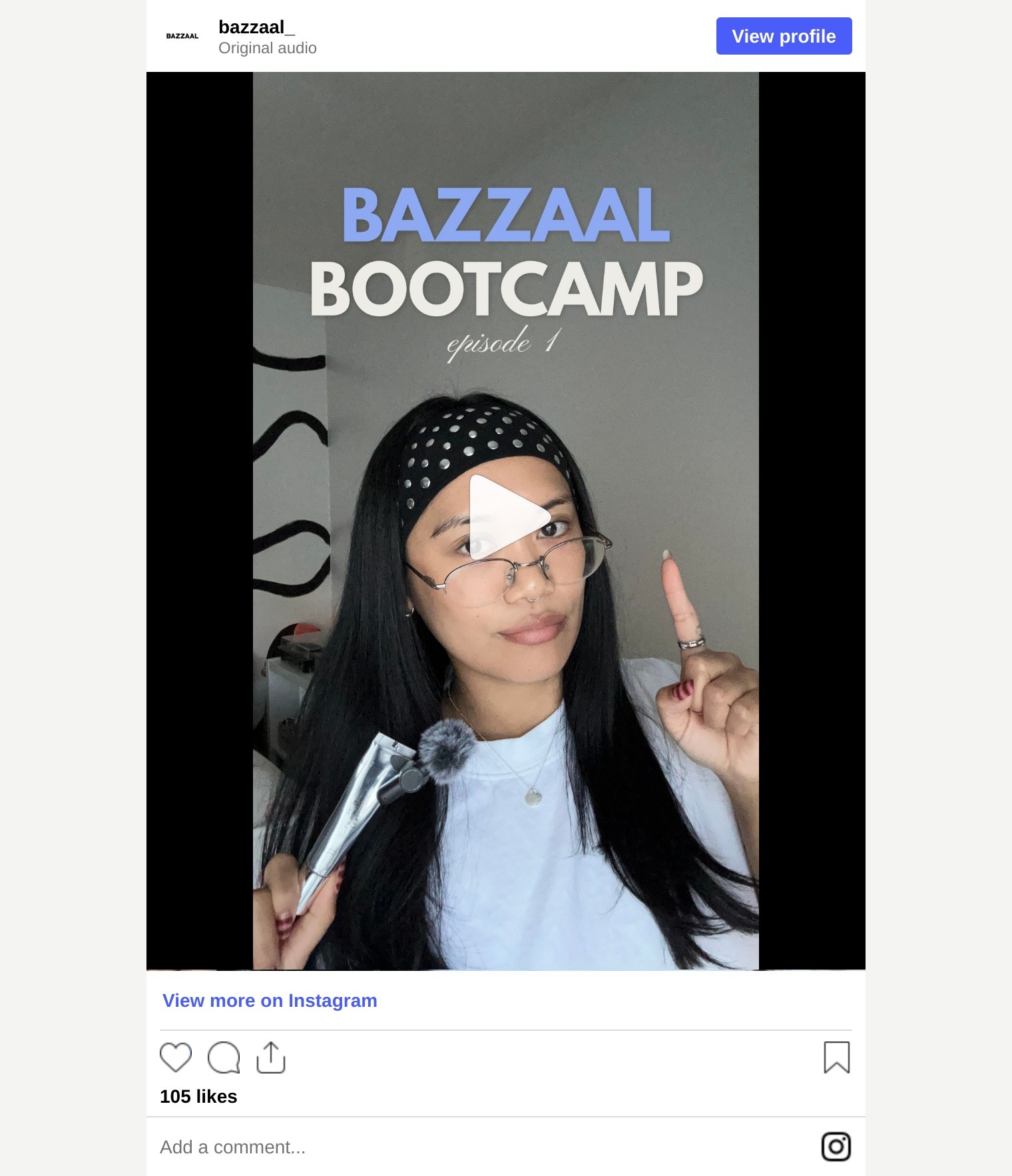
We make the same argument to creators on our own channel: a haul is not a reason to watch. Creator Bootcamp Ep. 1 on @bazzaal_.
Why the footage doesn't travel
The instinct after a strong Seoul week is to subtitle the best clips and push them to a US audience. It rarely works, and the reason isn't language.
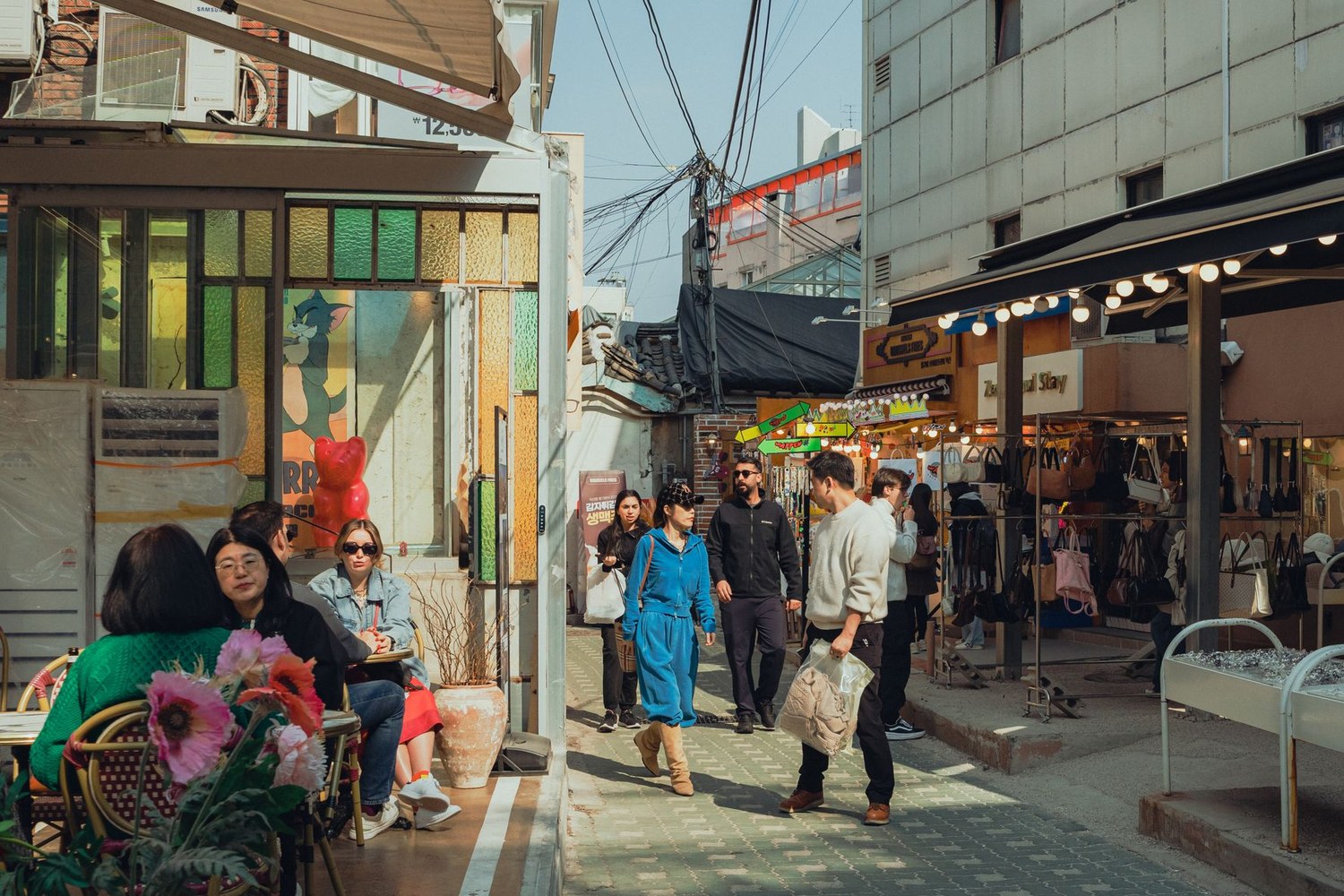
A queue on this street is social proof to a Korean viewer, who knows the block. To a US viewer it is a crowd standing somewhere they have never been, which is why the moment gets re-shot, not subtitled.
A Korean beauty consumer arrives with a different set of defaults. Ingredient literacy is higher, so a pharmacist at a counter reads as normal rather than novel. Sampling is a purchase ritual, so an unboxing carries weight. A queue is legible social proof because everyone watching knows the street. Move any of those to a US feed and the frame loses its footing: there's no pharmacy-beauty category to anchor the expert, free samples aren't a shopping event, and a crowd shot in Seongsu is a crowd shot somewhere the viewer has never been.
The insight underneath still holds. It just needs a different sentence.
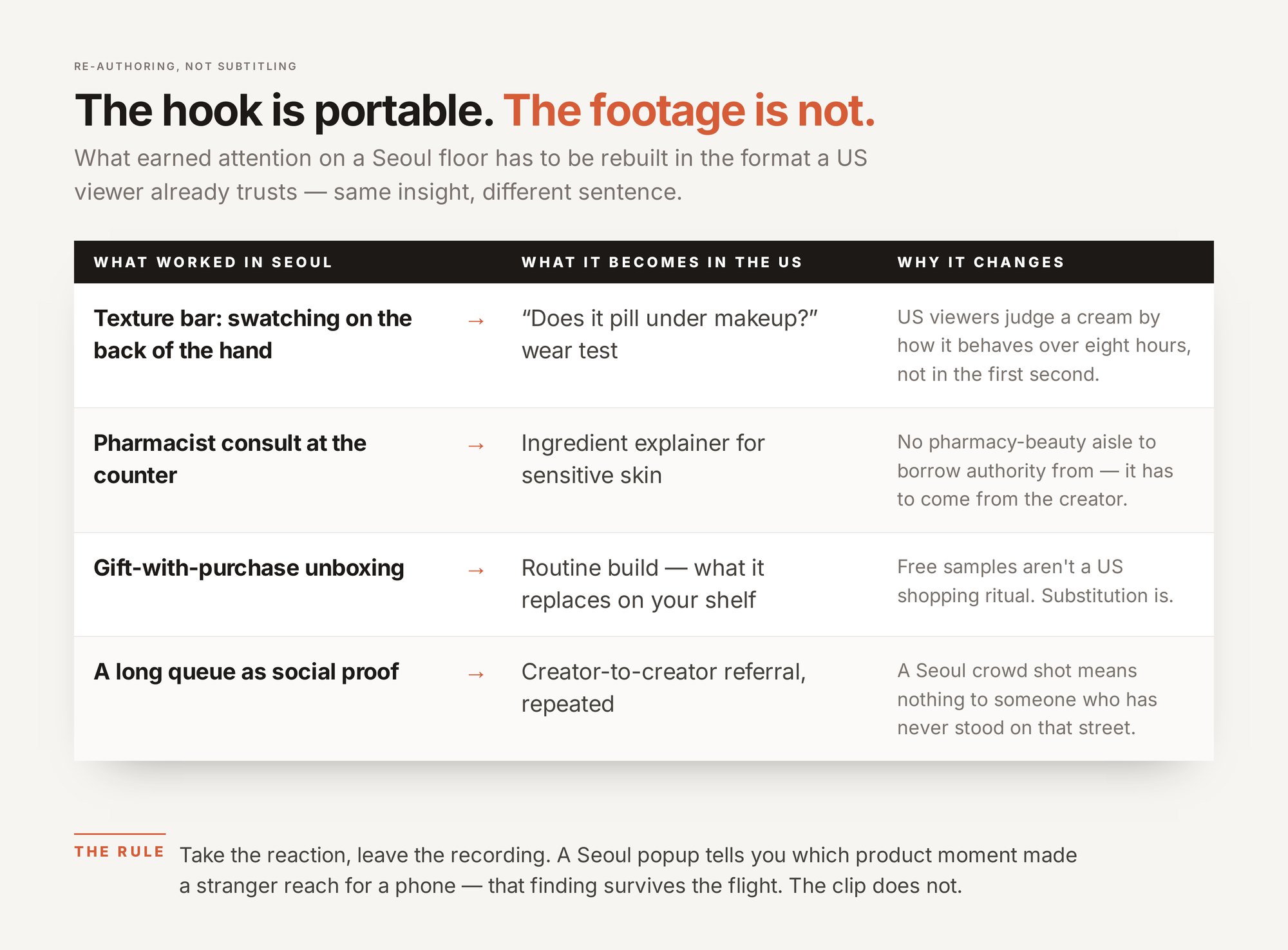
Same finding, re-authored for the format a US viewer already trusts.
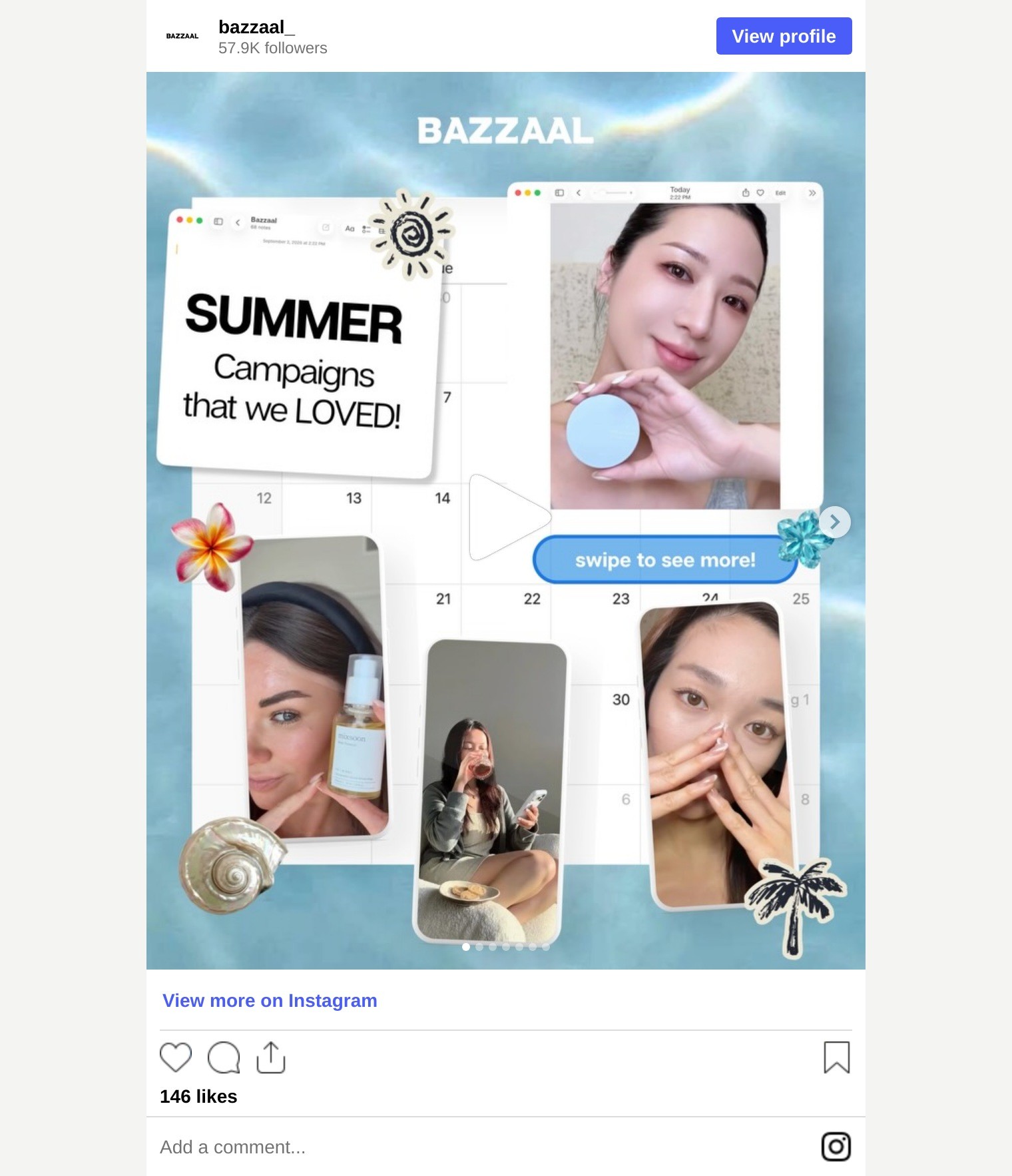
The re-authored version in practice. US creators running the same findings in their own rooms and their own sentences: this summer's collaborations from @bazzaal_.
What this doesn't change
A packed popup is not US demand, and a US shelf isn't either. Olive Young now has stores in Pasadena and Century City and a distribution center in Bloomington. We wrote about that beachhead in an earlier piece, and the lesson hasn't moved. In Korea the store does the discovery work, and in the US the feed does. Placement confirms demand that already exists. It doesn't create it.
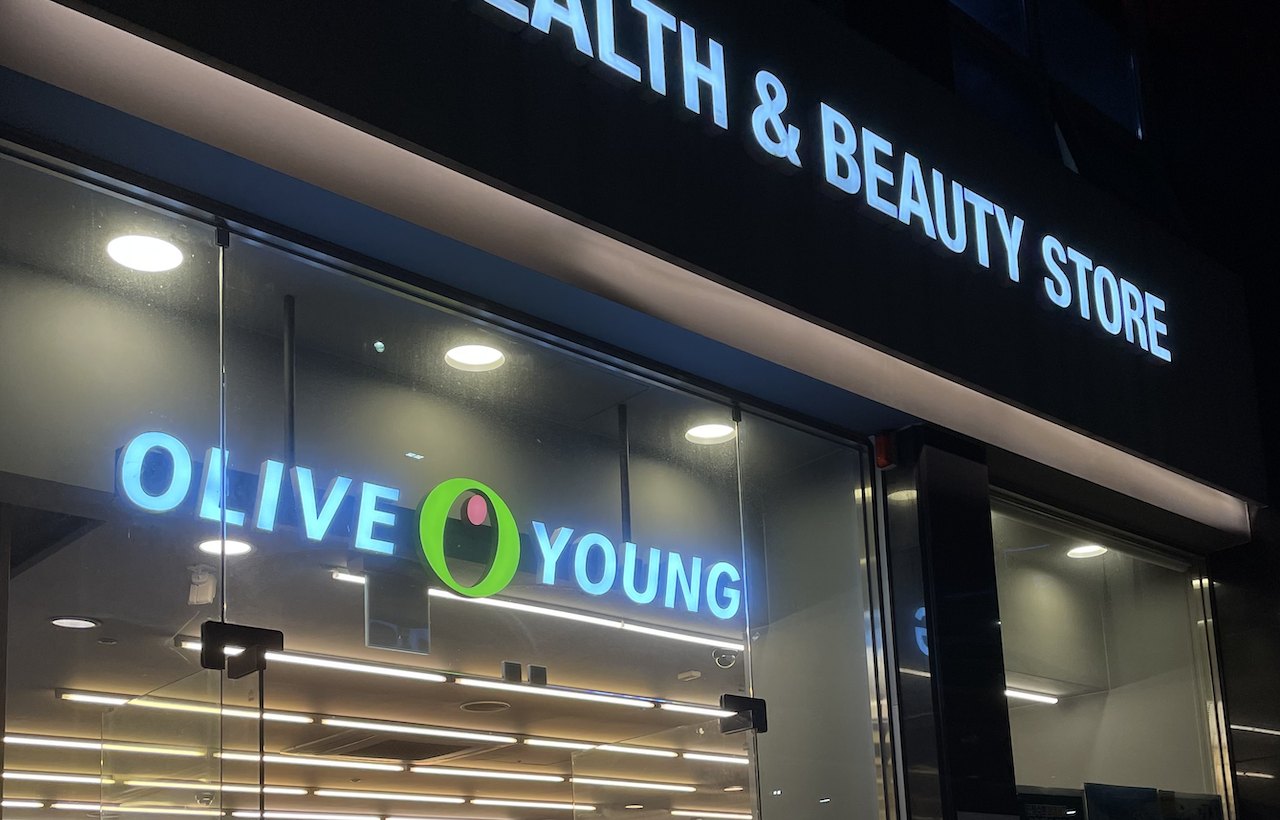
Olive Young in Korea, where the store does the discovery work. In the US that job belongs to the feed. The shelf confirms demand rather than creating it.
Photo: Pkccccj, CC BY-SA 4.0.
So a Seoul popup earns its budget twice or not at all. Once on the day, in traffic and sell-through. And once afterward, if it hands the US team a tested set of hooks instead of a folder of event photography.
What to do now
Write the shot list before the floor plan. Decide which of the four beats each creator owns (arrival, discovery, proof, handoff) and design the zones to make those shots possible.
Cast for roles, not for reach. One creator carries the space, one carries the demo, one carries the ingredients, one carries the day. Matching follower counts produces matching content.
Instrument the exit. Put the code, QR or affiliate link inside the content, not on a wall. Without it the popup only reaches people who were already in the room.
Log reactions as a hook library. Dwell time by zone, questions asked, what got filmed unprompted. This is the deliverable your US campaign inherits.
Run the top two hooks with US creators within 30 days. Re-authored, not subtitled. The finding decays fast; the clip was never going to work anyway.
BAZZAAL works from Los Angeles, inside this market, with Korean brands in Korean-company workflows. We run creator seeding, TikTok Shop, and paid campaigns. We turn what already tested in Seoul into content built for a US feed.
Plan the US leg of your Seoul moment →
Sources. Musinsa Beauty Festa attendance and online GMV: Herald Business, edaily, Newspim (August 25, 2026). Musinsa Beauty Hongdae store scale, brand and product counts, pharmacy floor: Ajunews, Financial News (September 10, 2026). First three days of sales: Money Today (September 16, 2026). Figures are as reported by those sources.
Related: where K-beauty actually operates in the US · creator seeding at scale · which US channel to start with
Written by
Yong Suk Choi
Chief Business Officer
Chief Business Officer at BAZZAAL. 15+ years of zero-to-one go-to-market execution across Korean and US markets, now leading growth for K-beauty brands entering the US from Los Angeles and Seoul.
Connect on LinkedIn
Planning your US launch?
BAZZAAL runs creator seeding, TikTok Shop, and paid campaigns for K-beauty brands entering the US — from Los Angeles, in Korean-company workflows.
Subscribe to STATESIDE
Weekly US K-beauty intelligence, from our team on the ground in LA.


