Black Friday 2026 Date: November 27. The K-Beauty Backward Calendar

By
Yong Suk Choi

Short answer: Black Friday 2026 is Friday, November 27, and Cyber Monday is Monday, November 30. For creator content to be live that week, K-beauty brands need to start in September.
Every brand we talk to in October asks the same question, and it is the wrong one. They ask what we can run for Black Friday. The question that determines the answer is when they can sign.
A creator campaign runs on lead time. You cannot switch it on in November. Casting, negotiation, product shipping, customs, content production, and posting each consume real calendar time, and they run in sequence. By the time a brand asks in October, most of that sequence has already been spent.
The creators you cast for November are the ones you use through December. Here is the calendar we work backward from, and the three external facts that set it.
The start date, not the sale date
Black Friday 2026 is November 27. Cyber Monday is November 30. Those are the dates your customer sees. They are not the dates that constrain you.
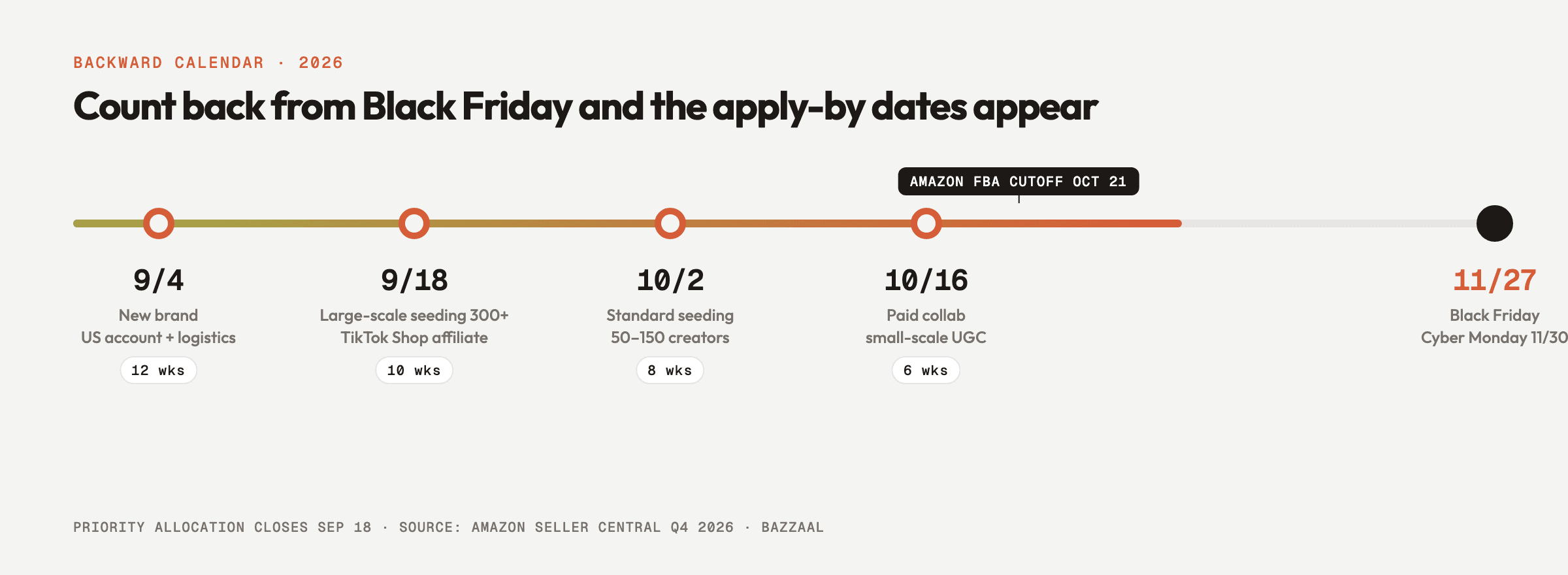
Work backward from November 27 and four distinct tracks appear, each with its own lead time. The date in the third column is the last day we can accept an application for that track and still have content live before Black Friday week:
Campaign type | Time required | Apply by |
|---|---|---|
New brand — includes US account and logistics setup | 12 weeks | September 4 |
Large-scale seeding, 300+ creators / TikTok Shop affiliate | 10 weeks | September 18 |
Standard seeding, 50–150 creators | 8 weeks | October 2 |
Paid collaboration, small-scale UGC | 6 weeks | October 16 |
After October 16 no track is open. From that point more budget does not shorten shipping and customs, so content cannot be live before Black Friday.
Amazon stops receiving on October 21
If you sell on Amazon, one external deadline overrides your marketing plan entirely.
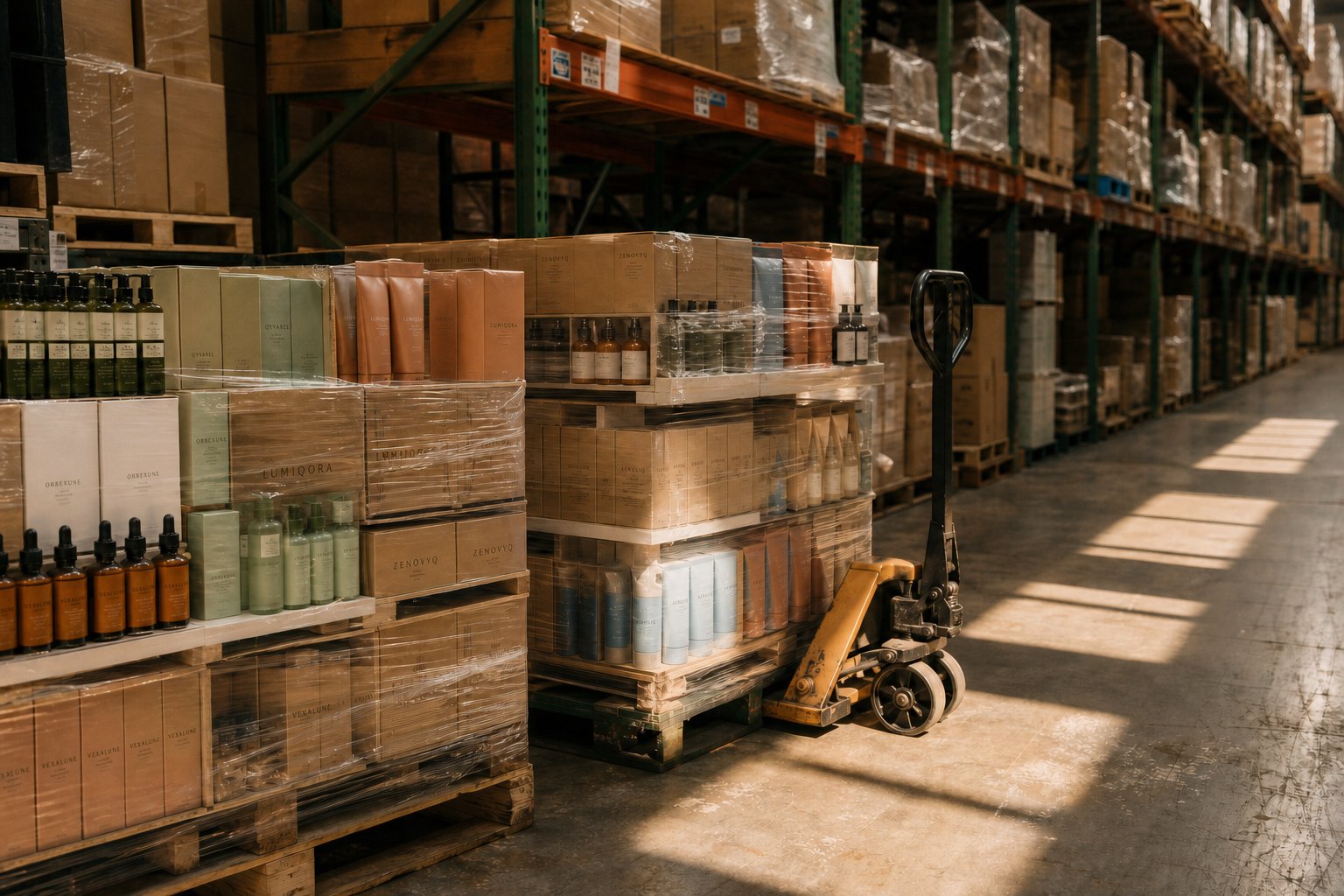
For Black Friday week inventory, Amazon's FBA cutoff is October 21 under minimal shipment splits. AWD shipments close October 14, and Amazon-optimized splits run to October 28. Shipments sent after the cutoff face lower inbound capacity limits, so inventory arriving then cannot be counted on for Black Friday.
Now add ocean freight from Korea. A brand that signs a campaign in late September and then begins production and shipping cannot physically land inventory by October 21. The creator content will publish on schedule and point customers at a listing that has nothing to sell.
This is why the application form asks where your inventory sits today.
Volume stopped working last year
The second fact comes from Traackr's 2026 State of Holiday Season Report, which analyzed more than 770,000 creators and 12 million pieces of content.
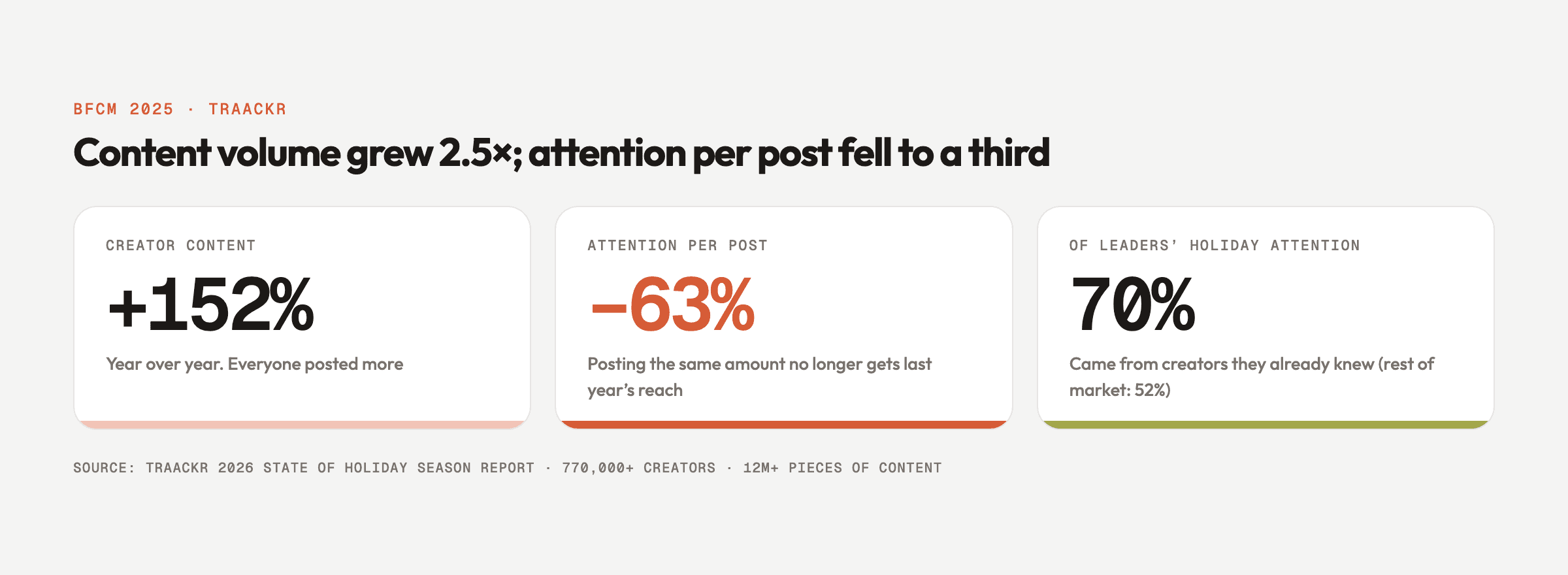
During BFCM 2025, creator content grew 152% year over year. Attention per post fell 63%. Sponsored attention grew 77% while organic attention grew 5%.
Read those together and the strategy for November is clear. Posting more no longer buys more attention, because everyone posted more. The brands that converted the season had something the late entrants could not buy in November.
What the winners had was relationships
Traackr's third finding is the one that should change your September.
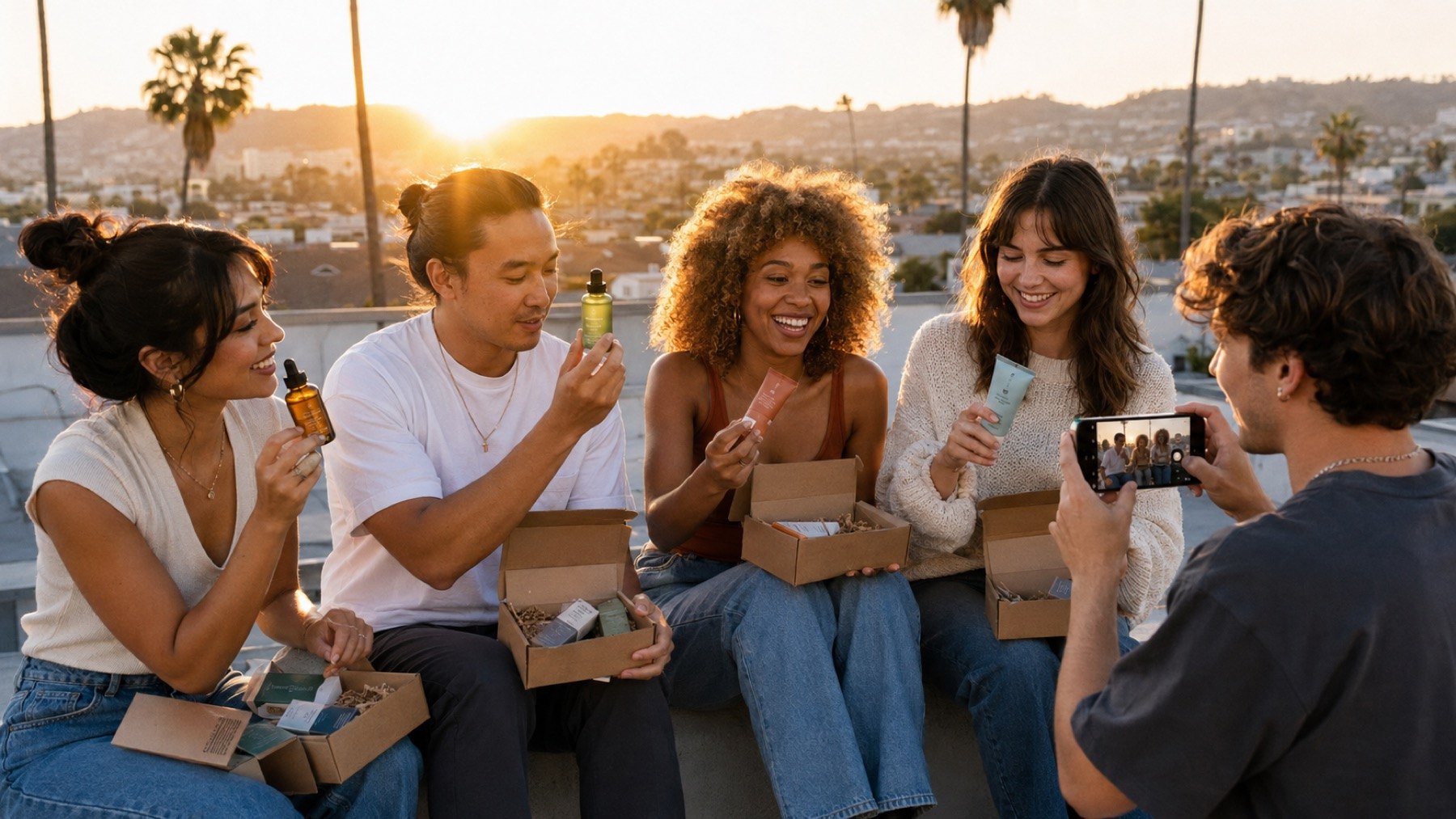
Beauty category leaders earned 70% of their holiday attention from creators they already had a relationship with. The rest of the market managed 52%.
That gap comes from timing. A creator who has already received your product, already posted once, and already knows how to talk about your texture and your price point produces different content in November than a creator who was cast three weeks earlier. The first one is an asset you built in September. The second is a transaction you made in November.
This is the pattern behind our own work as well. SKIN1004 posted 313 creator profiles across 453 media placements for 3.6M reach and $163,697 in measured media value — and the hard part at that scale was never casting. It was tracking, which has to be designed before the first product ships. CLIO ran inside a single short promotional window during Prime Day and reached 885K+ views with 57K+ engagements. BFCM is the same shape of problem: one narrow window, no second attempt.
What to lock in September
If you intend to sell in November, five decisions belong to September:
Inventory landing date. Work back from October 21 if Amazon matters, and confirm the freight booking before anything else.
Channel split. TikTok Shop affiliate, Amazon, and your own DTC store each require a different creator brief and a different commission structure.
Creator tier mix. Volume alone no longer produces attention. Decide how much of the budget defends existing relationships versus buying new reach.
Tracking design. Decide what you will count before creators start posting. Retrofitted tracking produces impressions, not measured media value.
Start date. Everything above is theory until the campaign actually begins, and that needs a signed scope.
Priority allocation closes September 18
We publish the date because it decides who gets a track first. Brands that apply by September 18 are allocated tracks and team capacity ahead of everyone else — September 18 is also the last day for the large-scale seeding and TikTok Shop affiliate track. After that, we can only offer whatever capacity is left on the standard seeding (October 2) and paid collaboration (October 16) tracks.
If you want to know whether Black Friday is still open for your brand, we answer within 24 hours — 48 if we need to check capacity first.
Reserve your Black Friday 2026 track →
Sources — Case metrics: bazzaal.com/case-studies/clio, /skin1004 (as published). Holiday attention data: Traackr, 2026 State of Holiday Season Report (770,000+ creators, 12M+ content pieces analyzed). Amazon inventory deadlines: Amazon Seller Central, Q4 2026 Peak Readiness.
Related: working back from an export voucher deadline · what each creator tier actually buys · running Amazon and TikTok Shop together
Written by
Yong Suk Choi
Chief Business Officer
Chief Business Officer at BAZZAAL. 15+ years of zero-to-one go-to-market execution across Korean and US markets, now leading growth for K-beauty brands entering the US from Los Angeles and Seoul.
Connect on LinkedIn
Planning your US launch?
BAZZAAL runs creator seeding, TikTok Shop, and paid campaigns for K-beauty brands entering the US — from Los Angeles, in Korean-company workflows.
Subscribe to STATESIDE
Weekly US K-beauty intelligence, from our team on the ground in LA.


